Monday, February 15, 2021

Tea! What Could Be More English? by Stacey Bregenzer

 TEA! 

What Could Be More English?

By Stacey Bregenzer


When the world is all at odds, and the mind is all at sea.
Then cease the useless tedium, and brew a cup of tea.
There is magic in its fragrance, there is solace in its taste.
And the laden moments vanish, somehow into space.
The world becomes a lovely thing, there’s beauty as you’ll see.
All because you briefly stopped to brew a cup of tea. ~ Anonymous

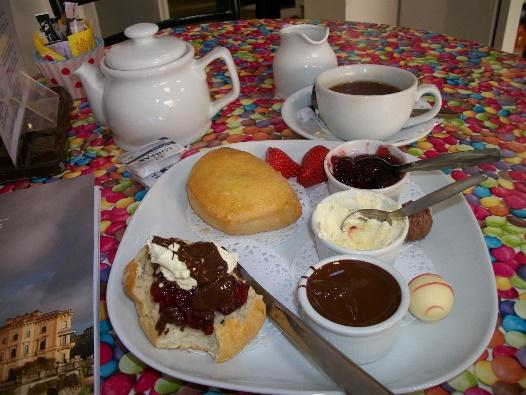


Why am I writing about tea?

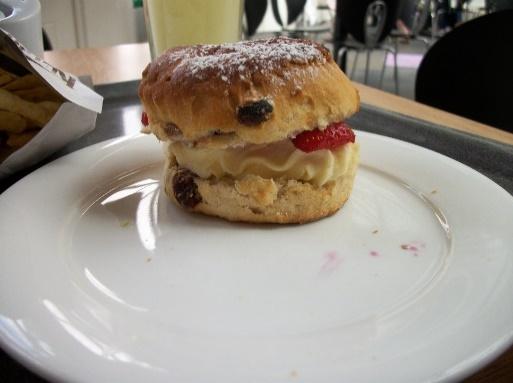
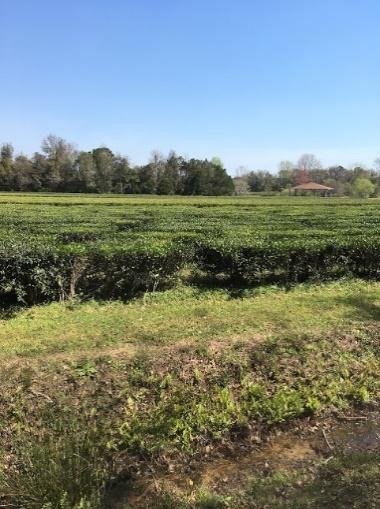
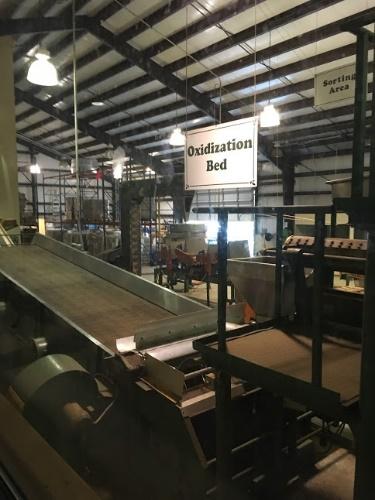
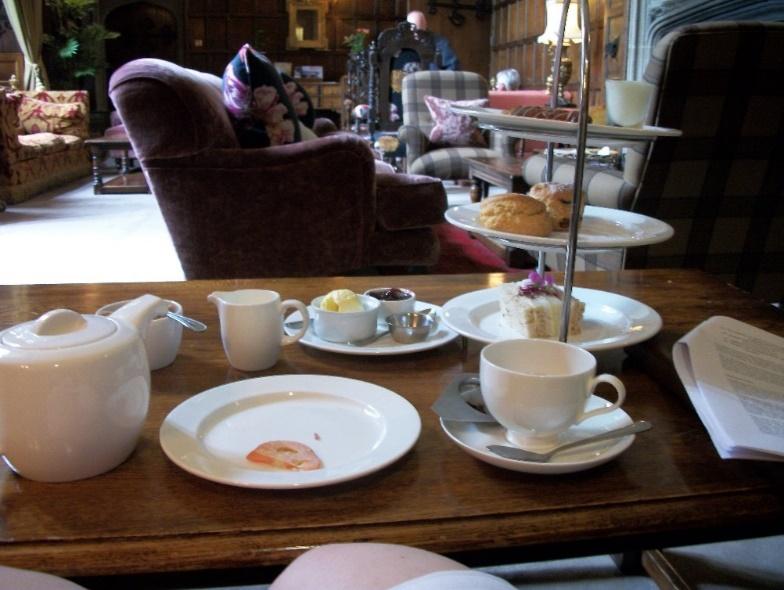
I love tea!  Some might even say to obsessive levels.  On trips (when we used to be able to travel that is), I love finding tea rooms, and I am even more excited if they are serving afternoon tea.  Throughout this piece, you will see some of my pictures from these experiences, as well as some from my visit to The Charleston Tea Plantation, the only tea plantation in the US.  I want to share some of the interesting (?) things that I have learned about tea and a bit about the history of tea in England.  I mean, what could be more quintessentially English than tea?  And it reached new heights of popularity during the Victorian age, acquiring its own full system of etiquette and dress.
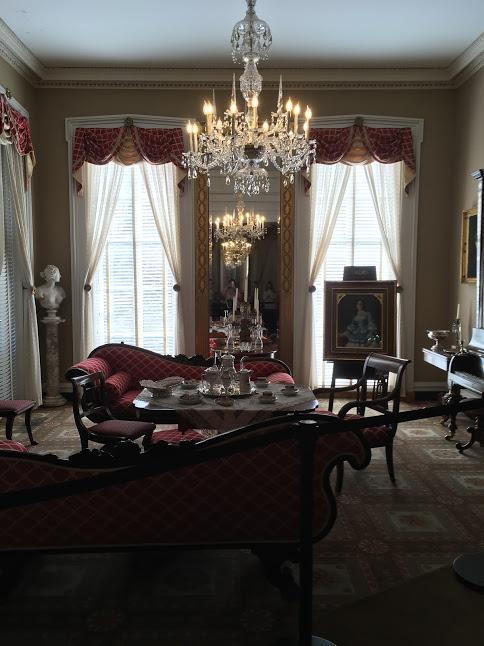


Time Traveling Through Tea: 

Tea’s Introduction in England to the time of Sherlock Holmes

Beginnings

  • 1657- Dutch East India Company first imports tea into London

  • 1662- King Charles II marries Catherine of Braganza, who brings a casket of tea as part of her dowry.  As tea is the Queen’s favorite beverage, it quickly becomes fashionable.


Late 1600s

  • Tea becomes popular among court and then the aristocracy. Black or Green tea is taken with female friends in bedrooms and small private rooms on delicate Chinese porcelain at elaborately carved tea tables all imported by the British East India Company now.

  • Physicians and apothecaries hawk tea as medicinal (like they did with many new food or drinks, but this time they may have been right… more to come on that!)

  • Sugar is commonly added to tea following the practice of adding it to medicinal tisanes.


Early 1700s

  • Demand for tea continues to grow as it becomes part of daily life among the wealthy, helped along by Queen Anne’s preference for tea.

  • Tea and toast begin to become breakfast staples replacing heavy breakfasts of meat and beer.  Coffee becomes harder to attain because of wars in Europe taking it out of the running as the breakfast choice in England.

  • Due to the high cost of tea, ladies don’t trust tea to the servants; they prepare it themselves and store it in their private rooms in elaborate, locked porcelain caddies.

  • The exposure of the practice of mixing metals and gypsum into Green Tea to improve its appearance by merchants leads Black Tea to become the preference.


Mid 1700s

  • The demand for sugar causes an increase in the popularity of sugar plantations in the Caribbean.  Milk begins to be added to tea as well, and the practice slowly becomes popular.

  • Shops begin to specialize in selling tea exclusively.  Twinings Tea Shop becomes the first shop that ladies can go to themselves without any impropriety.

  • As tea becomes more available, servants begin to receive a daily allowance of tea as a special perk.


Late 1700s

  • Tea and toast become the breakfast staple for all but the poorest of the poor.

  • It becomes fashionable to serve tea to visitors and at parties.  The British East India Company imports large quantities of complete matching teaware sets for entertaining.

  • Josiah Wedgewood perfects his method for creating creamware pottery, becoming the first domestic company to sell teaware with success.


Early 1800s

  • The schedule for meals starts to shift among the wealthy. In the previous century, the day consisted of a light early breakfast, followed by a heavy dinner in the afternoon, and a light supper with teas (a high tea). It becomes more common to have a later, heavier breakfast and a later dinner.  

  • The longer gap between meals causes nuncheon/luncheon to be added midday.  

  • High tea or a supper tea continues to be served at evening parties.


Mid 1800s

  • Dinner moves even later into the evening, and afternoon tea is added in the late afternoon replacing the evening high tea.

  • Specific etiquette and teatime menus begin to develop for afternoon tea.

  • High tea remains the daily practice for poor and working families, while wealthy families engage in high tea only on Sundays to allow servants an afternoon off.


Late 1800s

  • Afternoon teas and visitor’s tea become the practice throughout England, and in small villages, tea clubs, similar to our modern potlucks, mimic that trend.

  • “At Home” teas and tea receptions for up to 200 guests are fashionable in society.  Queen Victoria, who consumes tea throughout the day, introduces exclusive “Drawing Room” teas at Buckingham Palace.

  • Tea gowns are introduced giving ladies a break from formal dresses and tight corsets with their flowing shapes and soft fabrics.

  • Tea Rooms open widely, welcoming all classes. They provide an acceptable place for ladies to go without a male escort.  Glasgow becomes particularly famous for its tearooms, which feature the newest trends in art and design, including the work of Charles Rennie Mackintosh.


1900-1914

  • Tearooms become a popular meeting place for Women’s Suffrage Groups and Temperance Societies (explaining the reference to “tea-totalers” in relation to temperance.)

  • When Edward VII becomes King, behavior becomes more extravagant, as does furniture and fashion.  Tea parties follow the trend.

  • Tea gowns become even more floating and loose with elaborate designs featuring chiffon, silk, lace, and satin, and even crystals and gold tassels. (The epitome of what we think of for Edwardian fashion ala Downton Abbey!)

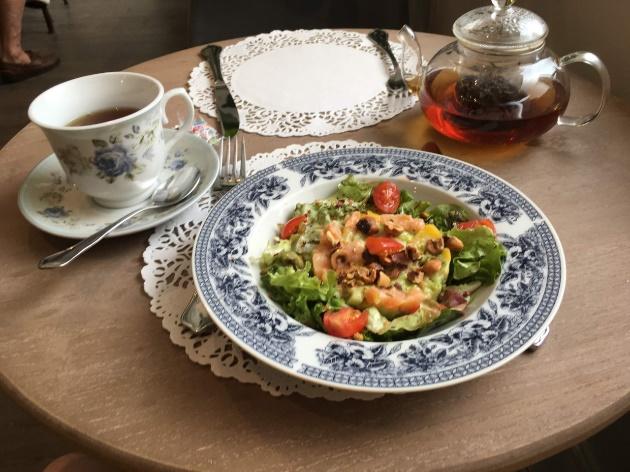
   

                                  Afternoon Tea                                             High Tea


What does this even mean?

Steeping- how long you leave the tea leaves or tea bag in hot water- Over-steeping or steeping 

in water that is too hot will make it bitter! Tea sommeliers claim that the 2nd steep is often better than the 1st for loose leaf tea.

Tea Ball- a holder for loose leaf tea

Tea Cozy- a cloth cover for your teapot that keeps it warm

Tea Caddy- a box, jar, or canister where tea is stored- You want to keep tea away from 

moisture, air, and sunlight to keep it from going bad!

Tea Service- Objects used for tea including the tea pot, tea cups, saucers, plates, linens, 

silverware, etc.

Tea table- Fancy, elaborately carved, smaller tables where tea was served in private rooms or 

drawing rooms.

Afternoon Tea- The more upscale tea usually held in the late afternoon, and small sandwiches 

and cakes are served. The fancy tea you see with the 3 tiered plates!

Variations: Light tea includes tea, scones, and small desserts, 

       Full tea adds sandwiches.

       Royal Tea adds champagne, wine or sherry.

High Tea- The less fancy and more substantial tea.  It includes breads, meat, cheese, soups, etc. 

The term comes from the taller table that these were served at as opposed to a dainty short tea table.

Cream Tea- Tea and scones with clotted cream and jam.  This is commonly available in tea 

rooms now.                              


How are there so many varieties?

Tea is made from the leaves of the Camellia Sinensis plant, and the different varieties are based on how these leaves are processed.  The amount of oxidization the leaves are exposed to determines the color of the tea.  Here are the main types of tea, the differences in how they are processed after being picked, and how they should be prepared for drinking:

Black Tea

Fully Oxidized

The leaves are wilted and slightly crushed.

Steep the leaves for 4 minutes in hot water heated to 212 degrees.

Green Tea

Unoxidized

The leaves are steamed or pan-fried to halt the oxidation process.

Steep the leaves for 2 minutes in cooler water heated to 180 degrees.

White Tea

Slightly Oxidized

The leaves are dried without being processed.

Steep the leaves for 5 minutes in water heated to 185 degrees.

Oolong

Partially Oxidized

The leaves are wilted and dried.

Steep the leaves for 3 minutes in water heated to 200 degrees.

Pu-ehr

Fermented

The leaves are processed like Green tea but then they are fermented.

Steep the leaves the same way as Black Tea.


Herbal Tea- Not Really Tea!

Herbal tea is not made from the tea plant and is more properly called a tisane.  It can be made from dried herbs, fruit, or flowers.

Rooibos- Also not tea!- It is made from the Rooibos plant.


Can tea be medicine?

Recently, there have been a lot of studies about the health benefits of tea.  Green tea has been found to have a whole list of health benefits, and it has even shown in some studies that it might possibly prevent Cancer, help with Alzheimer’s and Dementia, and lower the risk of Heart Disease.  In Lipton commercials recently, they have claimed that studies have shown that Black tea is also healthy.  Recent studies have shown that it might possibly reduce the risk of stroke and could lower blood pressure.  And Pu-ehr may help lower cholesterol.  The caffeine in tea also helps brain functions as it releases it slower than coffee, making you alert but not jittery.


Herbal tea or tisanes have been used as medicine for centuries.  Here are some examples of what particular ingredients blended with tea can help with:

Mint- Stomach complaints and boosts immunity with antibacterial and antiviral properties

Rose- Stomach complaints and fights inflammation in your system

Chamomile- Anxiety and stress relief and acts as a sleep aid

Lavender- Anxiety and stress relief and helps alleviate headaches and migraines

Ginger- Anti nausea, fights inflammation, and boosts immune system

Citrus- Boosts mood, as well as immunity with antibacterial and antiviral properties

Honey and Lemon- antiseptic and soothing for sore throats
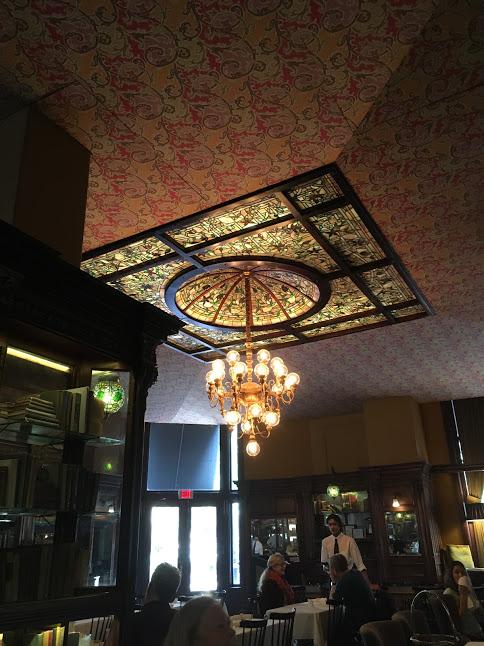

Great Tea Debates- These are serious people!


Milk in first or last?

 Should you put milk in the cup before adding tea?  Or should you add milk to the tea in the cup? Seriously a big deal in Britain to the point that scientific studies have been done!


Tea bags vs. Loose leaf

Is a tea bag an abomination or simply more convenient? Depends on who you talk to!


Tea kettle vs. Microwave

Should you spring for the tea kettle- either electric or one that goes on the stove- to heat water for tea?  Or is heating it in the microwave okay?  Take it from me: Do NOT tell a British person that you heat your water in the microwave unless you want a very long discussion about why that is barbaric!  Needless to say, I now own an electric tea kettle.


Hot Tea or Iced Tea?

Personal preference with die-hards on each side!  This probably also depends on the climate.


Sweet Tea vs. Unsweet Tea

BIG Discussion in the American South.  I never understood sweet tea- kind of thought it was gross actually- until I was in Charleston, SC in July.  I don’t think anything has ever tasted that good as that glass did after walking around in heat and humidity unlike anything I’ve ever experienced.  And I am used to St. Louis humidity where it feels like a wet washcloth has been held over your face!


Tea in the Sherlock Holmes Canon

“I have ordered a carriage,” said Lestrade as we sat over a cup of tea. “I knew your energetic nature, and that you would not be happy until you had been on the scene of the crime.”

-“The Boscombe Valley Mystery”


I had just finished my tea when he returned, evidently in excellent spirits, swinging an old elastic-sided boot in his hand. He chucked it down into a corner and helped himself to a cup of tea.

-“The Adventure of the Beryl Coronet”


“There is no great mystery in this matter,” he said, taking the cup of tea which I had poured out for him. “The facts appear to admit of only one explanation.”

-“The Sign of Four”


The table was all laid, and just as I was about to ring Mrs. Hudson entered with the tea and coffee.

-“The Naval Treaty”


Holmes nestled in silence into his heavy coat, and I was glad to do the same, for the air was most bitter and neither of us had broken our fast. It was not until we had consumed some hot tea at the station, and taken our places in the Kentish train, that we were sufficiently thawed, he to speak and I to listen.

-“The Adventure of the Abbey Grange”


“I wish none of their confidences,” said Holmes, when I reported to him what had occurred. He had spent the whole afternoon at the Manor House in consultation with his two colleagues, and returned about five with a ravenous appetite for a high tea which I had ordered for him. “No confidences, Watson; for they are mighty awkward if it comes to an arrest for conspiracy and murder.”

-“The Valley of Fear”

Sources:

  • Poem found in The Charleston Tea Room book series by Laura Childs

  • Quotes from Sherlock Holmes: The Complete Collection by Sir Arthur Conan Doyle 

  • Classes at The London Tea Room in St. Louis: Tea 101, Health Benefits of Tea, Tea Blending, and A Social History of Tea

  • Books:

    • A Social History of Tea- Tea’s Influence on Commerce, Culture, & Community by Jane Pettigrew and Bruce Richardson

    • Tea With Jane Austen by Kim Wilson

Saturday, January 23, 2021

January Meeting: The Six Napoleons


Last Saturday was a busy one for those with Zooms attuned to catch the distant view-halloo.  To avoid conflict with the Baker Street Irregular Birthday Weekend, we moved our meeting back to the third Saturday of the month which had us overlapping with meetings in Baltimore, Nashville, and London, so there were lots of folks in and out.  

If you aren't on the Parallel Case's email list, you can send us an email at parallelcasestl @ gmail DOT com to get added to the list for meeting announcements and blog posts.

You can also follow our Facebook page for Sherlockian news.

Parallel Case of St. Louis pins are available!  You can email Joe to add to your Sherlockian collection.


Michael shared an Etsy listing where you can buy a bust of Napoleon made out of chocolate.

The Baker Street Irregulars have released their 2021 titles, The Staunton Tragedy, Corporals, Colonels, and Commissionaires, and A Quiet Air of Mastery.

The Beacon Society's Joel Senter Essay Contest is currently going on and open to any students between fourth and twelfth grades.  Entries are due by March 1.

Randy gave a great recap of the BSI Birthday Weekend.

And Bill has a great article on our blog looking at the importance of the number FOUR (not six) in this story.


SIXN starts off with Lestrade spending an evening hanging out with Holmes and Watson in Baker Street.  Rob noted that their friendship has really developed by this time, as the three men are just sitting around whiling the evening away until Holmes asks what Lestrade has on his mind.

"Oh no, Mr. Holmes, nothing very particular."

"Then tell me about it."

Lestrade says his matter may actually be more for Watson than Holmes, a type of madness.  Someone has broken three identical busts of Napoleon around London.  Watson agrees with Lestrade that it could be monomania, but Holmes is interested in the fact that all three of the broken busts came from the same mold.


Holmes says that even though it seems trifling, some of his best cases started out small, like the Abernetty business, which hinged on the depth that the parsley had sunk into the butter on a hot day.

We kicked around some other recorded cases that started out as trifles but ended up more serious and came up with BLUE, COPP, STOC, SOLI, REDC, and LADY.


The next morning, Lestrade telegrams Holmes as there's been a development.  Holmes and Watson travel to the home of Horace Harker of the Central Press Syndicate, where not only has another bust of Napoleon been stolen, but a murder was committed on his doorstep!  

While they are looking over the dead man and the photograph he was carrying, the bust has been discovered down the street, smashed.  Holmes deduces that it was smashed in that specific spot because of the lamp that would give the thief light to see what he was doing.


We get to see Holmes toying with Lestrade as they discuss their ideas on how to follow matters up:

Lestrade: I'd ID the dead man and look into his acquaintances.

Holmes: I'd do it a different way.

Lestrade: Really?  How?

Holmes: Never mind, I'm not telling you.

After this, Lestrade lets Holmes keep the photograph that the dead man was holding, which led Rob to wonder why such important evidence would be entrusted to a civilian, especially since it would help Lestrade with his line of inquiry.  Kevin said it was probably either because Lestrade trusted Holmes so much or Doyle didn't understand police procedures.

Holmes and Watson start tracking down the busts of Napoleon which takes them to Morse Hudson's shop.  He tells them that the busts came from Gelder and Company, and he recognizes the man in the photograph.  His name is Beppo, an Italian piece work man who had worked in his shop, but disappeared two days before the bust busting started.


They follow up with a visit to Gelder and Company, where the manager of the place also recognizes the photograph of Beppo, who used to work there until he was arrested for knifing a man about a year ago.  This was right around the time that the Napoleonic busts were being made.

At lunch, Holmes read's Horace Harker's newspaper report of the robbery and murder at his house, including the false information that Holmes and Lestrade purposely fed the reporter.  Holmes chuckles and says, "The press, Watson, is a most valuable institution if you only know how to use it."


And we have a few current and former members of the press in The Parallel Case of St. Louis who had some thoughts on this!  Adam said his history in journalism was that readers would often accuse them of inflating stories to justify their existence, the complete opposite of Harker's events.  Madeline said she gets irritated when Holmes is a jerk to people in the newspaper industry in these stories.

Srini wondered what immigration laws in England were during this time.  Michael shared a story of Marconi having a hard time entering England with his invention when customs officials thought it was a bomb.  Sandy cited an opposite example from the Canon where some Italians from America were let in and led to the events of The Red Circle.

Later on, Lestrade meets Holmes and Watson back at Baker Street and tells them that he has identified the dead man as Pietro Vanucci, "one of the greatest cut throats in London" and Lestrade assumes that the man was Mafia, meaning his murder was Mafia related.

Lestrade's comment coupled with the derivative descriptions of Beppo led us into a spirited debate on racism in this story.  Olivia is part of a non-Sherlockian reading group who'd also read SIXN recently, and they were much more bothered by the anti-Italian sentiments than she expected.  Stacey cited King George IV's divorce where he used the press to fan anti-Italian sentiment during the 1840's.  


Maureen felt that Beppo as a villain was a necessary evil for this story.  European travel was common and a working class man was needed to get the pearl into the bust.  Pernille told us that about 4,000 Italians had immigrated to England during this time, and a large number of them were plaster workers.  And Maureen reminded us that so many of Doyle's villains are described as ugly, or in a derogatory fashion.  Pernille supported that with the importance of phrenology during this time as well.  Brad noted that other criminals in the Canon are worse than Beppo, but most of them don't take nearly the verbal abuse that Beppo does.


Sandy reminded us that we were viewing this story through a modern day lens, and we should remember that this is a historical document.  Olivia pushed back that there were people during the Victorian period who would not have spoken this way about Italians.  Michael said that we still have our biases today and society still has racism.  

Josh gave us a great recap of colonial travel during this time, especially in his background of musical history.  He also shared an article on the history of Italian immigration to England in the Victorian Era.  This led to Rob citing an article from The Napoleon Bust Business Again that discussed all of the important contributions to British society from Italian immigrants during that time.

Back in our story, Lestrade has decided that he's got the case as good as solved, until Holmes asks him what role the busts play in his theory.  "You never can get those busts out of your head," he replies.  Rob noted that by the time SIXN is taking place, Holmes and Lestrade have known each other for at least 20 years.  By now, Lestrade should know that if Holmes is interested in a small aspect, it's important.  But time and time again, the inspector blows right past Holmes's ideas!  Some people never learn.

But Lestrade is determined to go to the Italian Quarter that evening to ask around about Venucci and Beppo.  He says he will go with Officer Hill, who knows the area well.  For those of us around St. Louis, "Hill" is almost synonymous with "Italian" as St. Louis's Italian neighborhood is named The Hill!  Michael wondered if our neighborhood was named after this character.


Holmes convinces Lestrade to wait until tomorrow and accompany him to Chiswick that night.  After sending a telegram, Holmes spends the rest of the evening rummaging through old newspapers in the lumber room while Watson and Lestrade hang out in the sitting room.  Rob wondered if it was safe for such a smoker as Holmes to keep a room full of old newspapers in his house.  Quite the fire hazard!


After a stakeout in Chiswick, Holmes, Lestrade, and Watson catch Beppo leaving a house with a Napoleon bust.  In fact, his knife still has Venucci's blood on it! (Ew, gross)


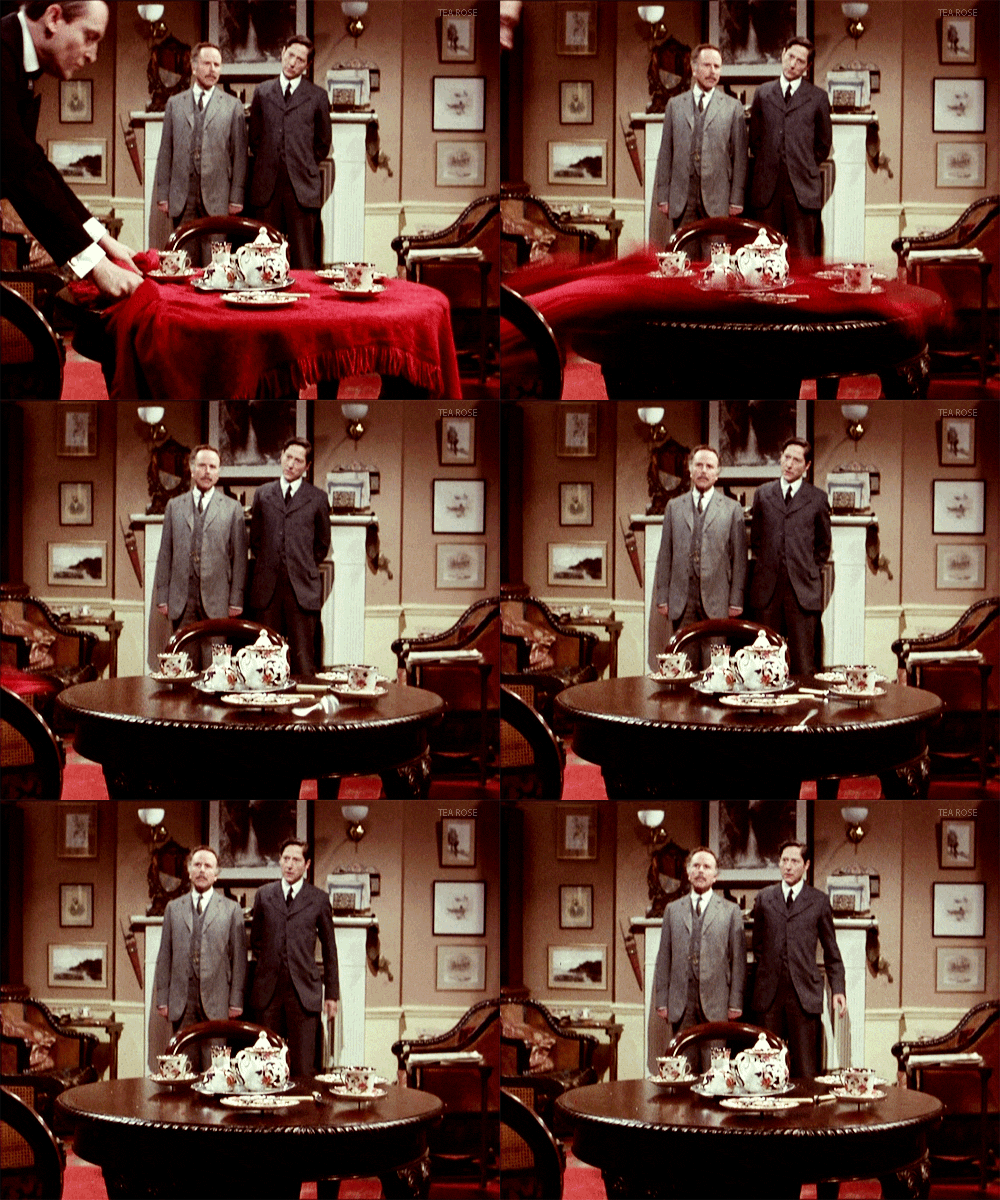
The next evening, Lestrade visits Baker Street again right before a Mr. Sandeford arrives to sell his Napoleon bust to Holmes as they had arranged.  After the man leaves, Holmes breaks the bust with his riding crop and pulls out "a round dark object fixed like a plum in a pudding," the black pearl of the Borgias!

We broke from the canonical story to all remember and appreciate Jeremy Brett's masterful performance of this scene where he pulled the table cloth off of the table...


Stacey gave us some background on the Borgia family, citing they were a very dramatic family.  They had strong connections to the papacy and inspired at least one famous opera.  She also noted that pearls, black pearls specifically, had strong ties to royalty.  Maureen cited that Italy's location would have made it a natural point for black pearls to enter Europe from their natural location of the Pacific Ocean.

Watson and Lestrade applaud Holmes once he's told them the whole story.  Watson records Holmes's reaction: "It was at such moments that for an instant he ceased to be a reasoning machine, and betrayed his human love for admiration and applause."


The pearl had been stolen from the hotel room of the Prince of Colonna about a year ago (side note: if you have a jewel in a hotel room in Victorian London, you're probably going to end up in a Sherlock Holmes story).  The maid was suspected, who was the sister of Pietro Vanucci.  Two days after the theft, Beppo was arrested, but not before he was able to sneak into Gelder and Company and formed the stolen pearl into a Napoleonic bust that was being molded that day.  

Stacey said she couldn't decide if putting the pearl in the bust was brilliant or stupid.  Pernille said it was probably circumstance that dictated his actions, as Beppo was being chased by the police.  Steve argued that Beppo probably would've gotten away with crime if Holmes had not been involved, so it was a pretty smart move.  Stacey thought Beppo was so unlucky.  The odds were four (or five) out of six that he would have gotten the pearl before Holmes did and he still ended up losing it!


Andrew, David, Steve, Pernille, and Sandy discussed the inflation of how much one of the Napoleon busts would sell for today, and Holmes's offer to Sandeford would be quite a sum!

The story ends with Holmes telling Watson to "Put the pearl in the safe."  We can only assume that it was stored right next to the blue carbuncle.

Although monthly meetings were a lot of fun in 2020, we are returning to our bi-monthly schedule.  So please plan to join us via Zoom on March 13 for The Three Students.  Zoom at once if convenient!

Tuesday, January 19, 2021

The Fourth Napoleon by William R. Cochran


What a strange chain of events takes place in “The Six Napoleons,” leading to Holmes taking possession of the stolen Borgia pearl. Lestrade seems to serve as narrator in many of the incidents, as he does not call upon Holmes until after the third bust is destroyed. Lestrade’s initial reaction to the first bust in the shop was to surmise that “The plaster cast was not worth more than a few shillings, and the whole affair appeared to be too childish for any particular investigation.” However, when the second victim, Dr. Barnicott, is burgled twice in the same night, Lestrade sees it as a serious crime and then comes to Holmes for assistance. One may well ponder why Lestrade finds the bust worth only a few shillings should now be considered a serious crime. 


The third instance, where the forth Napoleon is smashed, murder is involved. Although the murder takes place in a journalist’s home, Mr. Horace Harker, of the Central Press Syndicate, is quite put out that he did not get the story to press. The murder aside, it is interesting, as the fourth Napoleon was purchased “four months ago.” Could this coupling of fours possibly refer to a month– April? Note that the smashed bust is discovered “in the front garden of an empty house in Campden House Road.” Watson and Holmes held a vigil in “Camden House” in order to capture Colonel Moran. Ten years later, this story is published and Watson finds himself on Campden House Road. Moreover, even Sherlock Holmes draws attention to the empty house. 


One of the interesting elements of Lestrade’s account is that the bumbling detectives should find the plaster fragments and know that they were from this particular bust of Napoleon.  The Inspector is puzzled when Holmes draws his attention “ very particularly to the position of this house in the garden of which the bust was destroyed.”  


Lestrade looked about him. 


“It was an empty house, and so he knew that he would not be disturbed in the garden.” “Yes, but there is another empty house farther up the street which he must have passed before he came to this one. Why did he not break it there, since it is evident that every yard that he carried it increased the risk of someone meeting him?” 


“I give it up,” said Lestrade. 


Holmes pointed to the street lamp above our heads. 


“He could see what he was doing here and he could not be there. That was his reason.” Therefore it is clear that Lestrade is sticking to his theory that the busts are being smashed by someone who harbors a strong dislike of the “Little Corporal.” However, if the madman must see the pieces, it is clear that something is in the bust he is seeking. 


The fifth bust adds fodder to the theory that this case identifies Holmes’s date of birth. If the month was the fourth, could this fifth bust possibly indicate the fifth day. Note that as Holmes and Watson depart to Chiswick, Watson “was not surprised when Holmes suggested that I should take my revolver with me. He had himself picked up the loaded hunting-crop which was his favourite weapon.” They are about to lie in wait in the dark, hoping to snare the man who has expended so much energy breaking busts of Napoleon. How many times has Holmes referred to Professor Moriarty as “The Napoleon of Crime.” With Moriarty gone, Colonel Moran was captured in a similar manner in Camden House on 5th April 1894. As they head for their destination that fateful night in 1894, Watson remembers “It was indeed like old times when, at that hour, I found myself seated beside him in a hansom, my revolver in my pocket and the thrill of adventure in my heart.” And so it was as they headed to Chiswick the four wheeler—another reference to four. 


However, it is the sixth Napoleon that contains the Borgia Pearl. Since Lestrade is present as Holmes reveals the pearl in the sixth bust, why does the detective not take possession of the stolen pearl? True, Holmes went to great pains to ascertain that he owned the bust by having the good doctor sign a receipt. “You will kindly sign that paper, Mr. Sandeford, in the presence of these witnesses. It is simply to say that you transfer every possible right that you ever had in the bust to me.” It amazes me that Sanderford did not suspect the bust contained something of value when Holmes offered to pay almost ten times what had paid for it. Although it may well have made a rather mysterious jewel his for a moment, it is doubtful that Holmes will be allowed to keep the gem; and that he will return the pearl to its rightful owner.


Sunday, January 3, 2021

Some Further Thoughts on Private Revenge by John Keath

Some Further Thoughts on Private Revenge

By John Keath


Maybe it's just me or maybe it's coming back to the stories after so long an absence.  

What I get from the stories is not the same what got when I first read them as a teenager.  And what I look for now, is not what I looked for then, either.

I now look for the well-turned phrase that jumps out to me from the canon, which often encapsulates the story or some aspect of Holmes' extraordinary powers.

In this respect our most recent story, "The Adventure of Charles Augustus Milverton," does not disappoint:

"I think there are certain crimes," says Holmes in the second to last paragraph of the story, "which the law cannot touch, and which therefore, to some extent, justify private revenge." 

(Here, I should acknowledge the implications of this quotation for Rich's theory regarding the identity of the murderer in this case that he presented at our meeting.  But putting that it to one side, I find compelled to take Watson at his word as he presents the story.)

"Milverton" is perhaps not the most loved of the adventures.  It never made Conan Doyle's top 10 favorites list, or maybe anyone's.

But it well represents two of Doyle's most enduring contributions to the development of the genre of detective fiction. 


The first is the requirement that the story have a worthy adversary or villain.  The physical appearance of Milverton captured by Sydney Paget or Frederic Dorr Steele would be enough to impress him deeply into our consciousness.  (Even down to the astrakhan coat and the spectacles) 

It is hard to imagine a more fitting portrayal than Robert Hardy's performance in "The Master Blackmailer," (Granada, 1992).  (Could this same actor have also portrayed Winston Churchill?) 


But his manner--oh, his manner!  So reptilian and supercilious--bordering on the unctuous. So reprehensible and officious.  The universal response of almost everyone he comes in contact with is to recoil in moral outrage. 

In a word, oleaginous.

To be sure, Milverton seems more than equal to Holmes' challenges.  Their negotiation session yields no favorable resolution and Milverton leaves Baker Street ostensibly the winner "with a bow, a smile, and a twinkle." 


His curtained lair in isolated Appledore Towers features a a desk and red-leather turning chair, a tall green safe, and a large bookcase bearing a marble bust of Athena.  Every worthy villain must have a lair.  It only lacks a sign over the door saying "Abandoned all hope ye who enter here."  (Granada's CAM coach is also a nice touch).

So, Milverton certainly fills the bill of the requirement that a story have a true villain.  Even Lestrade agrees.

We now turn to the second requirement of a good detective story: that the mystery have a satisfying resolution.

To me, I find the shooting of Milverton befitting the ends of justice. We have spoken in our meetings of Holmes' special brand of justice, of when he will act and when he will not.  


In this case Holmes' "cold, strong grip upon [Watson's] wrist" makes clear his sentiments and intent as the murderess pumps bullet after bullet into Milverton's "shrinking body."  No tears are shed over his demise.

If there be justifiable homicide, let this be one.

Further, Watson's concepts of morality are likewise unchallenged by the course of events.  He states simply "justice had overtaken a villain."

So what of the witness?

What witness, you ask?


Have you forgotten the silent, omniscient marble bust of Athena?

This bothered me a little bit at first.  The Master Blackmailer took this aspect in an interesting direction in its extrapolations of the story, but I was not completely convinced.  So I did some research and found a different answer that seems to me to make some additional sense.   

I was curious about Athena, so I checked and learned that the Greeks viewed her as the goddess of wisdom, warfare, and other things.  Among her various symbols, I found snakes.  Suddenly it fits.  That Milverton would operate under her gaze seemed apropos.  

Holmes acted so coolly in the immediate wake of the shooting, without hesitation, but with sure dispatch, consigning venomous letters to the fire.   Their power reduced to ashes, they would cause no further injury.   

And in the final sense, Isn't it a fitting resolution that this comes as an offering at the altar of Athena?   And that a man who despicably dealt in the secrets of others dies at the hands of ever-secret avenger(s) before the silent god of his own creation and destruction?

A private revenge.