Tuesday, March 30, 2021

It’s All About the Numbers by Sherry McCowan


The following exchange occurs between two unnamed men in “A Study in Scarlet”:

“‘Tomorrow at midnight,’ said the first, who appeared to be in authority. ‘When the whip-poor-will calls three times.’

“‘It is well,’ returned the other. ‘Shall I tell Brother Drebber?’

“‘Pass it on to him, and from him to the others. Nine to seven!’

“‘Seven to five!’ repeated the other; and the two figures flitted away in different directions.”

Why were the particular numbers in the sign and countersign chosen? In his annotation of the passage, Leslie Klinger refers to Ben Vizoskie’s suggestion that nine to seven and seven to five are a shorthand for segments in the secret, unpublished Book of Mormon. However, I offer a different suggestion, namely that the symbolism in the entire passage is rich in meaning, including that of the call of the Whip-poor-will. 


There are two sets of numbers in the passage, named and unnamed. Those named are three (the number of times the Whip-poor-will calls), five, seven, and nine. The unnamed numbers are two and four.

Unpacking the the sign and countersign first, we find that nine is a multiple of three, which is the second prime number; seven is the fourth prime number; and five is the third. Nine, seven, and five added together equal twenty-one, the factors of which are three and seven. Moreover, the difference between nine and seven and between seven and five is two, which is the first prime number; and two twos equal four.

What is the significance of this? Two represents duality: lightness and darkness; male and female (we know this is not so simple, but 19th-century Mormons would have believed it to be); good and evil; and so on. Four refers, of course, to the Holy Four, the elders in the story.

Three and seven are important in various religions. In Mormonism there are, for example, the requirement for three witnesses and the three Nephite disciples (who don’t die until Christ returns), and there is the Trinity (though Mormons see that slightly differently than mainstream Christians do). 


As for seven, it is the number of days of creation; and it’s the number of times the Israelites circled the walls of the city of Jericho and the number of the day on which they did so. Seven is also the sum of three and four, an interesting account of which can be found in the article “A Study in Seven: Hebrew Numerology in the Book of Mormon (https://byustudies.byu.edu/article/a-study-in-seven-hebrew-numerology-in-the-book-of-mormon/):

Though the origins of this view are shrouded in the past, it is believed that one prime reason the number seven gained this particular symbolism of “perfection and completeness” is that it combines the number three and the number four. The number three symbolized heaven (or the masculine) and the number four represented the earth (or the feminine). As is commonly explained, “Seven symbolizes wholeness in many cultures, being the union of the divinity (three) and the material earth (four).” Seven was regarded as “a holy number yielded by adding the basic number of the masculine, 3, and the basic number of the feminine, 4.” “Because the number seven (the septenary) combines the ternary and quaternary—heaven or divinity and earth or humanity—it unifies the macrocosm and microcosm and signifies cosmic order.”

Concerning the signal, “three” in the exchange refers explicitly to the number of times the Whip-poor-will is expected to call. Implicit is the same number: “Whip-poor-will” has three syllables, and the number of major sounds in the call is three, as well. Three is paired with another significant number, four, as each of the three syllables has four letters. 


Finally, consider the W’s in Whip-poor-will. Inverted, they become M’s, the first letters of two sacred names: Mormon and Moroni. 

And so we have it. The signal and the sign and countersign are a treasure trove of meaning.


Thursday, March 18, 2021

March Meeting: The Three Students


Four countries and countless states were present at this month's meeting as we discussed The Three Students.  News items discussed this month were:

The Beacon Society sponsors it's own version of the Fortescue Scholarship, and you don't need to translate any Greek.

The Irregulars begins this month on Netflix and Heather has a blog post about the online backlash to casting a person of color as Watson.


Stacey had a blog post about the role that tea would have played in Holmes's and Watson's lives.  And a new group of Sherlockian tea lovers has formed on Facebook, called the Tea Brokers of Mincing Lane.

Heather is co-hosting an online convention this month looking at female characters in the Canon and in the BBC Sherlock series, Sherlolicon.  

221B Con will be online April 9-11.

Joe shared that our new pins are available for purchase.  $10 + $2 S/H.

A new Enola Holmes book will be released this summer.

The latest Mars Rover has taken SHERLOC and WATSON to outer space!


The Harpooners of the Sea Unicorn meet on March 19.

Sherlockians of Baltimore meet on March 20.

The Priory Scholars of NYC meet on Sunday, April 25.

The Theatre-Goers, Homeward Bound host nearly weekly Sherlockian movie screenings.

And finally, due to CDC and Holmes in the Heartland has been cancelled.  


*********************************************************************************************************


And then it was time to get down to discussing The Three Students!

Rich started the story discussion off with his poem titled, Why I Don't Like the Three Students.

Shana said she wants to know all of the reasons that Holmes and Watson found themselves in a college town doing research that Watson only alludes to.

Bill announced that 3STU takes place in Oxford due to the biblical connections he has found in the text and also said that the second paragraph for this story could qualify for the Bulwer-Lytton award.  Rob, Beth, and Tamar noted just how long the footnotes were for that paragraph in the Klinger Reference Library: two full pages!

Sandy wondered how Watson had known Soames for so long.  Bill noted that Watson graduated from the University of London, so he wouldn't have known Soames from there, but Arthur wondered if Watson and Soames were childhood friends.

Linda shared the theory that 3STU was a conspiracy between Watson and Soames to keep Holmes's mind occupied.  Nancy said that Occam's Razor most likely applied instead of it being a conspiracy.  

Soames convinces Holmes to help him prevent a cheating scandal.  Someone has seen the Greek text of Thucydides to translate for the Fortescue scholarship and he must find out who it is.  Bill cited Lord Donnegall's argument that most scholars would be familiar with Thucydides and wouldn't need to copy the text.  Rich said it would be similar to seeing that the text was on the first four amendments of the Constitution; no need to copy it, just go upstairs and study.  Robert argued that much of Thucydides's writing was on political philosophy.  So maybe Gilchrist would not have been as familiar with it if the text had been on history.


John wondered if Watson had just had a bad run at the horse races and they were avoiding thugs coming to collect their money.  So Watson begged Holmes to find a case that could be written up to pay off his debts.  Bill added that the name of Watson's horse was probably Thucydides!  Steve thought the university wasn't very prestigious, so Watson was trying to hide the name of the town as to not embarrass how dumb the students were.

Sandy said using Thucydides for the Greek translation would be as easy as using Ceasar for Latrin translation: too easy.  Rob noted that Soames's translation was only one part of the Fortescue scholarship, so maybe he had an easier section that year.  Michael wondered if the translation was from different selections of his writing.

Michael also shared with us that he went to the University of Chicago, and their school cheer was:

Themistocles, Thucydides,

The Peloponnesian War,

X squared, Y squared,

H2SO4.

Who for? What for?

Who we gonna yell for?

Go, Maroons!


After a sidetrack into the walking tours of Chicago crime, we were back to our story.

Arthur wondered about how quickly Gilchrist was able to get his commission in the Rhodesian police.  Elaine and Sandy thought that he had enlisted in the police, but was going to go ahead with the Fortescue scholarship in case he would be able to win.  Edith said that the Rhodesian commission would make him a Rhodes Scholar.

We turned our attention to Bannister, and Randy and Steve led a discussion about forgetting where you left your keys.  Shana noted that this character was named after an architectural feature that blends into the wallpaper and Sandy said that a bannister is something you lean on, which Gilchrist had to do.  Andy said it was good that he wasn't named after the flying buttress.

The clues left in Soames's office were a scratch in his side table, pencil shavings, and clay.  David wondered how Gilchrist's shoe would only leave one tear in the desk instead of multiple.  Holmes decides that this was a crime of happenstance.  


Randy wondered if Bannister had done this on purpose to help Gilchrist.  Steve disagreed with that idea but Randy said Bannister was pretty jittery.  Shana said Bannister would have immediately realized how bad this all made him look.  We debated whether or not Soames or the university would have known if Bannister had worked for the Gilchrist family previously.

Elaine pointed out how snarky Holmes was towards Watson a few times in this story.  Shana cited Watson saying how out-of-place Holmes felt when he wasn't in Baker Street and wondered how miserable he was during the Great Hiatus.  Rob countered that Holmes was fine in a stone hut in Dartmoor and Monica said she can get a little testy without her creature comforts.  Steve said Holmes was in a bad mood because solving a kid stealing answers to a test would put someone of Holmes's status in a bad mood.  

Sandy wondered if it was just because his research on English charters wasn't going well.  Robin pointed out that Holmes said in HOUN that he had a knowledge of charters and many charters would have been lesser copies of the originals, and Holmes was mad that he was working with poor quality documents.


Andrew shared a theory that Holmes was in a bad mood because 3STU took place over Holmes's birthday, which he thinks is April 5.  Brad piggybacked on that theory that Holmes was in town for his birthday, visiting someone named Hilton Soames, which sounded a lot like "Sherlock Holmes" and Watson says that he's known Soames for some time.  "Hilton Soames" is a pseudonym for the third Holmes brother and the only reason Holmes took such a trifle of a case was to help his brother.  Shana said that name wasn't any worse than Sherrinford.  

Steve said he thought that many times the attitude that Holmes takes in the stories could be related to the attitude that the author was in during this time.  Right around the time that 3STU was written, Doyle had lost a cricket match.  Randy said that Doyle was always under pressure to turn in his next story.  Rob noted that stories collected in "The Return" weren't anything that Doyle wanted to write any more.

Monica shared that a brand of shampoo and conditioner is made by a company called Gilchrist-Soames.  

After a handful of people bagged on 3STU, Michael offered up that he once wrote a paper about what he DID like about the story.  3STU shows that British universities forwarded young men who already had a leg up in their social standing.  Even the foreign student, Dulat Ras, would have been from a well-to-do Indian family.  Michael argued that Holmes's bad attitude was that he disapproved of the British university system.  Srini supported Michael's statement of Ras, saying that Indian students would have had to paid to travel and live in England for their studies, and would then return to their home to administer in local politics.


In discussing the titular three students, we talked about Watson's depiction of Ras.  Srini said Watson was probably scarred by his time in India.  Arthur opened up a discussion about all of the bad characters who come from British colonies and John talked about how the colonies were used to ship people off to as punishment.  Madeline shared that the However Improbable podcast talked about the role of the colonies in the Sherlock Holmes stories.

Nancy noted that the three students showed different demographics of university students of the time.  Lou shared some research he had done into who Fortescue was and why a prize was named after him.  He found that a 17th century scholar had that name and wrote legal texts in Latin.  Beth said that the exam would probably have been over the Classics, which would have also included Latin.  Nancy said she thought that it would have also included philosophy, archaeology, geometry, and literature.

Arthur asked if there had been adaptations other than the radio shows.  Michael cited the Arthur Conan Doyle Encyclopedia and said that there was also a silent film version, starring Ellie Norwood.


Rob wondered if this story would have been better liked if this story included a good, old-fashioned murder.  Shana pointed out that Watson changed the names in this story, but supposedly left so many other people's reputations wide open for speculation in his other stories.

We debated whether or not Bannister was an honorable servant.  Shana said he was caught between two positions and navigated the situation as honorably as he could.  Nancy found his dedication to a dead master was odd, but honorable.  Robert said that honor meant a very different thing 125 years ago.  

Robert compared Bannister to Brunton in MUSG, who was fired for looking at his master's papers.  Beth said that Soames was originally upset with Bannister for the unpardonable sin of rifling through his papers.  And Steve said that the servants in HOUN weren't fired even after they had aided and abetted an escaped criminal.  Brad noted that the bar for an "honorable" servant couldn't have been that high.  Beth said that you had to trust your servants because you had no other choice!  Shana said Charles Augustus Milverton was always lurking to help out your upset servant.

Rob wrapped up the discussion with Holmes's statement, "For once you have fallen low.  Let us see in the future how high you can rise."  You can almost hear the violins swelling swelling under that line.

Our next meeting will be on May 8 to discuss The Golden Pince-Nez.  Zoom at once if convenient!

Tuesday, March 16, 2021

Holmes in the Heartland Cancellation

Holmes in the Heartland has been cancelled for 2021.  


CDC and St. Louis county advisories make it very unlikely that we would be able to safely put on an event that would be worth everyone's time and travel.  Anyone who has prepaid for their registration will receive a refund this week.


We want Sherlockians to be able to experience St. Louis to the fullest and enjoy their time with friends.  When we can safely put on such a gathering, we will be back!

Saturday, March 13, 2021

Why I Don't Like the Three Students by Rich Krisciunas

The Canon’s stories have been rated and ranked

by Conan Doyle, Sherlockians and the rest.   

In Watson’s retelling of the adventures   

This one’s definitely not close to the best.  


A half chapter of Thucydides copied. Oh my!! (Big deal)

There’s no murder, no blackmail or ransom to pay.

No vampire, snake bite or secret society. 

No one’s kidnapped or poisoned. There’s no foul play.


No Irene’s or Violets. No ladies at all. 

No client climbs the seventeen steps at Baker Street.

No hasty rides on trains or traps or hansom cabs.

The weather’s fine. Not even a threat of fog or sleet.


No hiding in the dark or amputated thumbs.

No ladies found in coffins to heighten the suspense.

No secret papers stolen or wrongs to avenge.

There’s not a single shooting done in self-defense!


Let’s peruse the story a little more closely.  

Somebody has eyeballed the tutor Soames’ test. 

Holmes’ plan to study early English Charters

Was cut short so he could attempt what he does best.


The three suspects were living on the floors above

However, we barely heard any of them speak. 

There’s no interaction. Few details about them.  

Admit it, their character development’s weak. 


There’s the Indian; “inscrutable and quiet.”  

There’s rude Miles McLaren who won’t open his door,  

A guy named Gilchrist who doesn’t have a first name!  

Why couldn’t we have learned just a little bit more?


But the biggest flaw in Watson’s writing  

Is the question of why Holmes got involved? 

If he’d remained back at the library.

This is a case that would still have been solved.


While Holmes spied a pencil and sawdust from a shoe

The butler correctly identified the cheat, 

The thief confessed and packed his bags to Rhodesia, 

Way before Holmes’ investigation was complete.


I thank all of you for listening patiently

Hopefully you’re convinced and I think you’ll agree  

Watson’s other stories are all so much better.  

Any way you read it, this one’s all Greek to me


Monday, February 15, 2021

Tea! What Could Be More English? by Stacey Bregenzer

 TEA! 

What Could Be More English?

By Stacey Bregenzer


When the world is all at odds, and the mind is all at sea.
Then cease the useless tedium, and brew a cup of tea.
There is magic in its fragrance, there is solace in its taste.
And the laden moments vanish, somehow into space.
The world becomes a lovely thing, there’s beauty as you’ll see.
All because you briefly stopped to brew a cup of tea. ~ Anonymous


Why am I writing about tea?

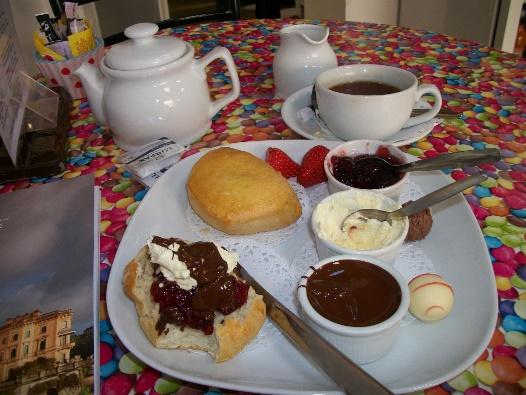
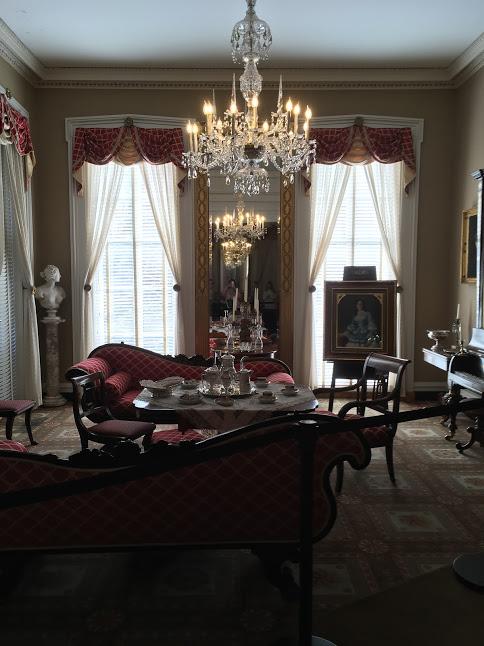
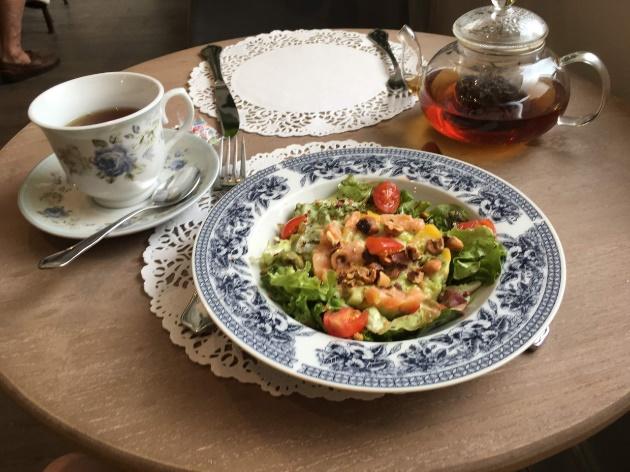
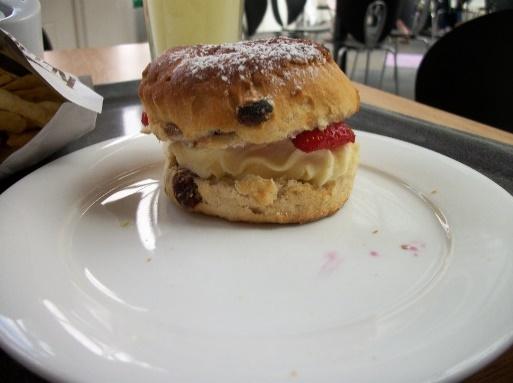
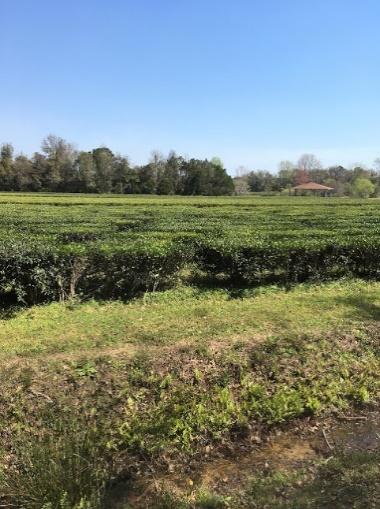
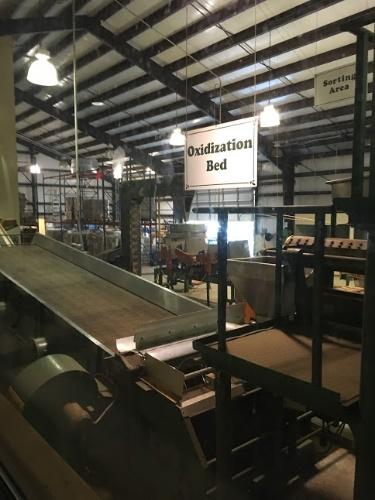
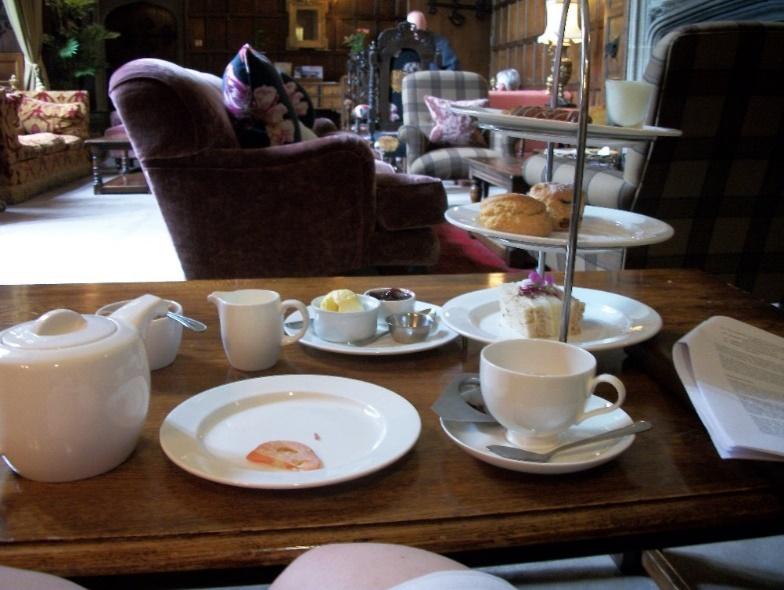
I love tea!  Some might even say to obsessive levels.  On trips (when we used to be able to travel that is), I love finding tea rooms, and I am even more excited if they are serving afternoon tea.  Throughout this piece, you will see some of my pictures from these experiences, as well as some from my visit to The Charleston Tea Plantation, the only tea plantation in the US.  I want to share some of the interesting (?) things that I have learned about tea and a bit about the history of tea in England.  I mean, what could be more quintessentially English than tea?  And it reached new heights of popularity during the Victorian age, acquiring its own full system of etiquette and dress.


Time Traveling Through Tea: 

Tea’s Introduction in England to the time of Sherlock Holmes

Beginnings

  • 1657- Dutch East India Company first imports tea into London

  • 1662- King Charles II marries Catherine of Braganza, who brings a casket of tea as part of her dowry.  As tea is the Queen’s favorite beverage, it quickly becomes fashionable.


Late 1600s

  • Tea becomes popular among court and then the aristocracy. Black or Green tea is taken with female friends in bedrooms and small private rooms on delicate Chinese porcelain at elaborately carved tea tables all imported by the British East India Company now.

  • Physicians and apothecaries hawk tea as medicinal (like they did with many new food or drinks, but this time they may have been right… more to come on that!)

  • Sugar is commonly added to tea following the practice of adding it to medicinal tisanes.


Early 1700s

  • Demand for tea continues to grow as it becomes part of daily life among the wealthy, helped along by Queen Anne’s preference for tea.

  • Tea and toast begin to become breakfast staples replacing heavy breakfasts of meat and beer.  Coffee becomes harder to attain because of wars in Europe taking it out of the running as the breakfast choice in England.

  • Due to the high cost of tea, ladies don’t trust tea to the servants; they prepare it themselves and store it in their private rooms in elaborate, locked porcelain caddies.

  • The exposure of the practice of mixing metals and gypsum into Green Tea to improve its appearance by merchants leads Black Tea to become the preference.


Mid 1700s

  • The demand for sugar causes an increase in the popularity of sugar plantations in the Caribbean.  Milk begins to be added to tea as well, and the practice slowly becomes popular.

  • Shops begin to specialize in selling tea exclusively.  Twinings Tea Shop becomes the first shop that ladies can go to themselves without any impropriety.

  • As tea becomes more available, servants begin to receive a daily allowance of tea as a special perk.


Late 1700s

  • Tea and toast become the breakfast staple for all but the poorest of the poor.

  • It becomes fashionable to serve tea to visitors and at parties.  The British East India Company imports large quantities of complete matching teaware sets for entertaining.

  • Josiah Wedgewood perfects his method for creating creamware pottery, becoming the first domestic company to sell teaware with success.


Early 1800s

  • The schedule for meals starts to shift among the wealthy. In the previous century, the day consisted of a light early breakfast, followed by a heavy dinner in the afternoon, and a light supper with teas (a high tea). It becomes more common to have a later, heavier breakfast and a later dinner.  

  • The longer gap between meals causes nuncheon/luncheon to be added midday.  

  • High tea or a supper tea continues to be served at evening parties.


Mid 1800s

  • Dinner moves even later into the evening, and afternoon tea is added in the late afternoon replacing the evening high tea.

  • Specific etiquette and teatime menus begin to develop for afternoon tea.

  • High tea remains the daily practice for poor and working families, while wealthy families engage in high tea only on Sundays to allow servants an afternoon off.


Late 1800s

  • Afternoon teas and visitor’s tea become the practice throughout England, and in small villages, tea clubs, similar to our modern potlucks, mimic that trend.

  • “At Home” teas and tea receptions for up to 200 guests are fashionable in society.  Queen Victoria, who consumes tea throughout the day, introduces exclusive “Drawing Room” teas at Buckingham Palace.

  • Tea gowns are introduced giving ladies a break from formal dresses and tight corsets with their flowing shapes and soft fabrics.

  • Tea Rooms open widely, welcoming all classes. They provide an acceptable place for ladies to go without a male escort.  Glasgow becomes particularly famous for its tearooms, which feature the newest trends in art and design, including the work of Charles Rennie Mackintosh.


1900-1914

  • Tearooms become a popular meeting place for Women’s Suffrage Groups and Temperance Societies (explaining the reference to “tea-totalers” in relation to temperance.)

  • When Edward VII becomes King, behavior becomes more extravagant, as does furniture and fashion.  Tea parties follow the trend.

  • Tea gowns become even more floating and loose with elaborate designs featuring chiffon, silk, lace, and satin, and even crystals and gold tassels. (The epitome of what we think of for Edwardian fashion ala Downton Abbey!)


                                  Afternoon Tea                                             High Tea


What does this even mean?

Steeping- how long you leave the tea leaves or tea bag in hot water- Over-steeping or steeping 

in water that is too hot will make it bitter! Tea sommeliers claim that the 2nd steep is often better than the 1st for loose leaf tea.

Tea Ball- a holder for loose leaf tea

Tea Cozy- a cloth cover for your teapot that keeps it warm

Tea Caddy- a box, jar, or canister where tea is stored- You want to keep tea away from 

moisture, air, and sunlight to keep it from going bad!

Tea Service- Objects used for tea including the tea pot, tea cups, saucers, plates, linens, 

silverware, etc.

Tea table- Fancy, elaborately carved, smaller tables where tea was served in private rooms or 

drawing rooms.

Afternoon Tea- The more upscale tea usually held in the late afternoon, and small sandwiches 

and cakes are served. The fancy tea you see with the 3 tiered plates!

Variations: Light tea includes tea, scones, and small desserts, 

       Full tea adds sandwiches.

       Royal Tea adds champagne, wine or sherry.

High Tea- The less fancy and more substantial tea.  It includes breads, meat, cheese, soups, etc. 

The term comes from the taller table that these were served at as opposed to a dainty short tea table.

Cream Tea- Tea and scones with clotted cream and jam.  This is commonly available in tea 

rooms now.                              


How are there so many varieties?

Tea is made from the leaves of the Camellia Sinensis plant, and the different varieties are based on how these leaves are processed.  The amount of oxidization the leaves are exposed to determines the color of the tea.  Here are the main types of tea, the differences in how they are processed after being picked, and how they should be prepared for drinking:

Black Tea

Fully Oxidized

The leaves are wilted and slightly crushed.

Steep the leaves for 4 minutes in hot water heated to 212 degrees.

Green Tea

Unoxidized

The leaves are steamed or pan-fried to halt the oxidation process.

Steep the leaves for 2 minutes in cooler water heated to 180 degrees.

White Tea

Slightly Oxidized

The leaves are dried without being processed.

Steep the leaves for 5 minutes in water heated to 185 degrees.

Oolong

Partially Oxidized

The leaves are wilted and dried.

Steep the leaves for 3 minutes in water heated to 200 degrees.

Pu-ehr

Fermented

The leaves are processed like Green tea but then they are fermented.

Steep the leaves the same way as Black Tea.


Herbal Tea- Not Really Tea!

Herbal tea is not made from the tea plant and is more properly called a tisane.  It can be made from dried herbs, fruit, or flowers.

Rooibos- Also not tea!- It is made from the Rooibos plant.


Can tea be medicine?

Recently, there have been a lot of studies about the health benefits of tea.  Green tea has been found to have a whole list of health benefits, and it has even shown in some studies that it might possibly prevent Cancer, help with Alzheimer’s and Dementia, and lower the risk of Heart Disease.  In Lipton commercials recently, they have claimed that studies have shown that Black tea is also healthy.  Recent studies have shown that it might possibly reduce the risk of stroke and could lower blood pressure.  And Pu-ehr may help lower cholesterol.  The caffeine in tea also helps brain functions as it releases it slower than coffee, making you alert but not jittery.


Herbal tea or tisanes have been used as medicine for centuries.  Here are some examples of what particular ingredients blended with tea can help with:

Mint- Stomach complaints and boosts immunity with antibacterial and antiviral properties

Rose- Stomach complaints and fights inflammation in your system

Chamomile- Anxiety and stress relief and acts as a sleep aid

Lavender- Anxiety and stress relief and helps alleviate headaches and migraines

Ginger- Anti nausea, fights inflammation, and boosts immune system

Citrus- Boosts mood, as well as immunity with antibacterial and antiviral properties

Honey and Lemon- antiseptic and soothing for sore throats


Great Tea Debates- These are serious people!


Milk in first or last?

 Should you put milk in the cup before adding tea?  Or should you add milk to the tea in the cup? Seriously a big deal in Britain to the point that scientific studies have been done!


Tea bags vs. Loose leaf

Is a tea bag an abomination or simply more convenient? Depends on who you talk to!


Tea kettle vs. Microwave

Should you spring for the tea kettle- either electric or one that goes on the stove- to heat water for tea?  Or is heating it in the microwave okay?  Take it from me: Do NOT tell a British person that you heat your water in the microwave unless you want a very long discussion about why that is barbaric!  Needless to say, I now own an electric tea kettle.


Hot Tea or Iced Tea?

Personal preference with die-hards on each side!  This probably also depends on the climate.


Sweet Tea vs. Unsweet Tea

BIG Discussion in the American South.  I never understood sweet tea- kind of thought it was gross actually- until I was in Charleston, SC in July.  I don’t think anything has ever tasted that good as that glass did after walking around in heat and humidity unlike anything I’ve ever experienced.  And I am used to St. Louis humidity where it feels like a wet washcloth has been held over your face!


Tea in the Sherlock Holmes Canon

“I have ordered a carriage,” said Lestrade as we sat over a cup of tea. “I knew your energetic nature, and that you would not be happy until you had been on the scene of the crime.”

-“The Boscombe Valley Mystery”


I had just finished my tea when he returned, evidently in excellent spirits, swinging an old elastic-sided boot in his hand. He chucked it down into a corner and helped himself to a cup of tea.

-“The Adventure of the Beryl Coronet”


“There is no great mystery in this matter,” he said, taking the cup of tea which I had poured out for him. “The facts appear to admit of only one explanation.”

-“The Sign of Four”


The table was all laid, and just as I was about to ring Mrs. Hudson entered with the tea and coffee.

-“The Naval Treaty”


Holmes nestled in silence into his heavy coat, and I was glad to do the same, for the air was most bitter and neither of us had broken our fast. It was not until we had consumed some hot tea at the station, and taken our places in the Kentish train, that we were sufficiently thawed, he to speak and I to listen.

-“The Adventure of the Abbey Grange”


“I wish none of their confidences,” said Holmes, when I reported to him what had occurred. He had spent the whole afternoon at the Manor House in consultation with his two colleagues, and returned about five with a ravenous appetite for a high tea which I had ordered for him. “No confidences, Watson; for they are mighty awkward if it comes to an arrest for conspiracy and murder.”

-“The Valley of Fear”


Sources:

  • Poem found in The Charleston Tea Room book series by Laura Childs

  • Quotes from Sherlock Holmes: The Complete Collection by Sir Arthur Conan Doyle 

  • Classes at The London Tea Room in St. Louis: Tea 101, Health Benefits of Tea, Tea Blending, and A Social History of Tea

  • Books:

    • A Social History of Tea- Tea’s Influence on Commerce, Culture, & Community by Jane Pettigrew and Bruce Richardson

    • Tea With Jane Austen by Kim Wilson