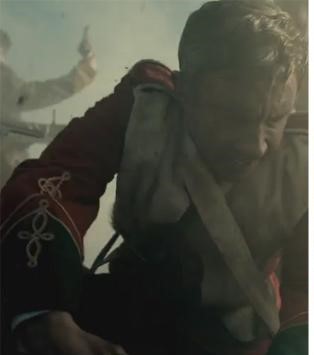
After the original date of March's meeting was cancelled due to the Covid-19 outbreak, we ventured to try our first digital meeting via Zoom. And it went pretty well! It allowed a few folks who normally don't travel to St. Louis to join us and we had a solid meeting overall.
Because we wanted to stay focused on the discussion of HOUN while on Zoom, we didn't have any news, announcements, or giveaways. But Bill and Tom did have some great papers they wanted to share with everyone and you can read them on our blog: (Bill's paper) (Tom's paper)
Our story starts with a client leaving his walking stick behind and Watson attempting to model Holmes's methods and deduce information about the client. He's somewhat successful but not totally, warranting one of the greatest back-handed compliments of the Canon: "It may be that you are not yourself luminous, but you are a conductor of light. Some people without possessing genius have a remarkable power of stimulating it."
Dr. Mortimer soon arrives at 221B and announces to Holmes that he covets his skull for phrenology.
Rob cited Brad Keefauver's theory about Mortimer bringing his dog to London but not his wife. Elaine guessed that it was because she was too busy. Bill pointed out that Holmes could not have seen the dog on the street as he claimed.
We then went into the history of the curse of the Baskervilles and we discussed Heather's theory that Baskerville Hall was tied to the cult of Gozer from Ghostbusters. Stacey taught us about the Dartmoor legends related to the area and the mist surrounding it. Tom and Stacey have both been to Dartmoor and talked about how beautiful it seemed on sunny days, but terrifying when the fog rolled in.
Hugo's friends chase after Sir Hugo, who is being chased by a great hound. His captor had died of fright, just like many people in the Canon do. The dog "turned its blazing eyes and dripping jaws upon them."
Bill said that time with Sir Hugo was like a bad Victorian Spring Break experience.
Randy cited the flashback scene in the Rathbone Hound movie as his favorite version of this part of the story. Cathy asked what everyone's favorite filmed version of HOUN was. Kevin cited Jeremy Brett.
Randy and Joe chose Rathbone.
And Elaine said she liked the Hammer version.
Stacey, Christopher, Tom, and Joe talked about Sir Richard Cavell being the basis for Sir Hugo Baskerville.
Christopher talked about the history of the dog used in the Hammer version and how they tried to make a friendly dog look like a terrifying beast.
Dr. Mortimer tells Holmes about Charles Baskerville's death three years ago and the chapter ends with the famous line, "Mr. Holmes, they were the footprints of a gigantic hound!" Rob wondered how the original Strand readers dealt with having to wait a whole month for the next chapter after that cliffhanger.
Henry Baskerville arrives and has a few boots missing here and there. Baskerville and Dr. Mortimer are followed by a man claiming to be Sherlock Holmes, which Elaine found to be a nice touch. Kevin pointed out that Holmes laughed at this and Randy thought that Holmes was impressed with his adversary. Rob pointed out that if Holmes had caught the cab in chapter 4, the story would have ended right there!
Christopher thought that Watson's description of the Moor is one of the most evocative writing in the whole book and Rob said he has seen it said plenty of times that the moor is it's own character in the story.
Elaine really enjoyed the convict subplot that included lights on the moor, stolen clothing, and family secrets.
Randy and Tom talked about Dartmoor prison's relation to Baskerville Hall and it's future.
Bill found it interesting that Holmes told Watson that he couldn't investigate the walking stick, but he sent him out to help with Henry Baskerville's investigation. Kevin countered that Watson was sent to report the facts, but not investigate. Tom agreed that what Watson lacked in investigative skills he made up for in bravery. Rob argued that the Watson from the Canon has never really been captured in a film or TV adaptation.
As Watson chronicles his time with Baskerville, Sir Henry is becoming more and more interested in his neighbor, Beryl Stapleton. Bill wondered if anyone else found Beryl Stapleton to be the most interesting character in the entire story.
Rob asked if anyone else found it odd that Stapleton would ask Baskerville to wait three months before courting his sister. Stacy and Kevin discussed all of the red flags that this request should have raised.
Watson has identified a man on the moor, and has tracked down Laura Lyons. He is putting pieces together, just very, very slowly. Stacey said that if Watson had been interested in Beryl Stapleton, he probably would have worked much quicker. Tom said that Watson had a narrow focus because he knew Holmes was waiting on his reports. Kevin wondered if this story fell during a time when Watson was married, but Randy and Michael checked Baring-Gould's chronology to say that this story took place in 1888, so he would not have been married.
While Baskerville is sneaking time with Beryl, Watson decides to hunt down the man on the tor, tracking him to a stone hut, leading to another great cliffhanger, ""It is a lovely evening, my dear Watson. I really think that you will be more comfortable outside than in."
Of course, it's Holmes outside. Rob found it interesting that Holmes said he wouldn't have been able to recognize Watson's footprint "amid all the footprints of the world" and had to use his cigar ash to identify that it was him.
Holmes gives Watson a ton of information saying that Stapleton is actually married to Beryl, he used to be a schoolmaster in Northern England, had a relationship with Laura Lyons but she does not know the truth about him, Stapleton was the man following Baskerville back in London, and that Beryl sent a warning to Baskerville telling him not to come to Dartmoor.
Bill and Joe debated which version was worse, the Peter Cook or Tom Baker version. We all agreed that there couldn't be a winner, only losers in that conversation.
Back at Baskerville Hall, Holmes covers up part of Hugo Baskerville's portrait and Watson could quickly see the resemblance to Stapleton. Rob wondered if Dr. Mortimer was so into atavism, why couldn't he see the resemblance? Randy said he was only interested in skulls and nothing else.
Holmes and Watson pretend to leave for London and tell Baskerville to go to dinner with Stapleton. This led to a discussion on whether Holmes was negligent in putting Baskerville at undue risk. Stacey pointed out that they were all lucky that Stapleton didn't change his method and decide to poison Baskerville at dinner.
After dinner, Baskerville leaves to walk home for the climactic scene with the hound:
A hound it was, and enormous coal-black hound, but not such a hound as mortal eyes have ever seen. Fire burst from its open mouth, its eyes glowed with a smoldering glare, its muzzle and hackles and dewlap were outlined in flickering flames. Never in the delirious dream of a disordered brain could anything more savage, more appalling, more hellish be conceived than that dark form and savage face which broke upon us out of the wall of fog.
Tom pointed out that the hound couldn't have actually have had phosphorus on it because phosphorus burns at room temperature. Michael offered that the hound was so angry because it was a hot dog.
After the Holmes kills the hound, Stapleton has escaped only to be swallowed up by the moor, and Beryl has been found tied up.
Cathy wondered who was with Baskerville when Holmes, Watson, and Lestrade tracked down Stapleton's hiding spot.
Rob questioned why Holmes would make Watson wait a month to hear him hear all of the final details. Why didn't they talk about it on the train ride back to London?
Elaine quoted Doyle's description of Beryl's hot-blooded temperament, which led to a discussion of anyone with Spanish descent in these stories.
As we wrapped up, Randy quoted the last line from Rathbone's version: "Watson, the needle!"
Tom reinforced everyone's opinion that this story is very, very well written. Normally, our group finds ourselves kicking around different theories to address plot holes in the short stories, but you can tell that Doyle spent way more than his typical one sitting for this tale.
Next month's meeting will be The Adventure of the Empty House via Zoom again. RSVP at our Facebook event page or via email to get the link. Come at once if convenient!
Saturday, April 11, 2020
Thursday, April 9, 2020
Can we trust the Canon? by Tom Crammond
Recently, at a society meeting, there was a discussion about FINA. During the discussion it was purported by some that possibly some of the events did not happen as Watson stated them in FINA. From there the discourse turned to the idea that much of what Watson wrote in FINA was simply not true or that Watson had grossly exaggerated some of the details? Even more preposterous was the idea put forth that Holmes had invented Moriarty and that most of what Holmes had related to Watson was not true – Holmes fabricated the story or Holmes had not told Watson the real facts concerning Moriarty.
Immediately in mind, I flashed back to the GREE. What always struck me as a central theme of the Canon was Holmes’s confidence in Watson and Watson’s loyalty to Holmes. In GREE, Watson is surprised to discover that Holmes has an older Brother Mycroft, who is also a gifted observer and logician. Watson even goes so far as to question Holmes when Holmes tells Watson that Mycroft has even better powers of observation than Holmes possesses! Of course, at the window of the Diogenes Club Watson sees the truth play out, and thanks to Watson’s narrative, we also see it play out. But Holmes’s retort to Watson about his brother’s powers has always been for me a central axiom of the Canon:
“My dear Watson,” said he, “I cannot agree with those who rank modesty among the virtues. To the logician all things should be seen exactly as they are, and to underestimate one’s self is as much a departure from truth as to exaggerate one’s own powers. When I say, therefore, that Mycroft has better powers of observation than I, you may take it that I am speaking the exact and literal truth.”
This assertion by Holmes tells us that everything that Watson records about their adventures in the Canon are fundamentally true! Further, that when Holmes speaks about a case or a criminal, he speaks the exact and literal truth! Of course, we know that a few times in the Canon, Holmes has strived to protect Watson; and in DYIN, for example, Holmes lies and deceives Watson in order to get Watson to aid him in apprehending Mr. Culverton Smith. But afterwards, Holmes confesses to Watson why he fooled Watson and details the exact and literal truth about the events in DYIN!
When FINA ends Watson is indeed, fooled and again misinformed, but in the opening of EMPT, Holmes relates the exact and literal truth to Watson and even apologizes to Watson for putting Watson through a terrible mental ordeal.
To be clear, there may be the occasion where Watson may have exaggerated some minor details or perhaps been a bit florid in his depiction of events, but essentially Watson is always telling what he literally saw happen! Further, most importantly, Watson is always being sure to accurately record and publish information which Holmes tells Watson about the case at hand or the info/details Holmes relates about events related to a particular case or previous cases.
One instance where I, myself, think Watson might have exaggerated takes place in CHAS. You recall after the shots rang out, Holmes and Watson are desperate to get away from Appledore Towers. Watson wrote the following about the incident:
“It was a six-foot wall which barred our path, but he sprang to the top and over. As I did the same I felt the hand of the man behind me grab at my ankle; but I kicked myself free and scrambled over a glass-strewn coping. I fell upon my face among some bushes; but Holmes had me on my feet in an instant, and together we dashed away across the huge expanse of Hampstead Heath. We had run two miles, I suppose, before Holmes at last halted and listened intently. All was absolute silence behind us. We had shaken off our pursuers and were safe.”
Watson may have indeed been exactly correct about this escape or may have been slightly been mistaken about the height of the wall – actually height is a detail one can only guess? Further, being a middle-aged physician in, perhaps, not the best of shape, they just might have not run two miles before they halted to listen. It may have only been one and half miles, but the exact distance in not a pivotal detail.
The importance of this example being Watson related the story in a manner which retells all the salient points and details. It is important to note that in this story Holmes relates to Watson the vile character of Milverton. And we know that what Holmes states is the exact and literal truth:
Do you feel a creeping, shrinking sensation, Watson, when you stand before the serpents in the Zoo and see the slithery, gliding, venomous creatures, with their deadly eyes and wicked, flattened faces? Well, that’s how Milverton impresses me. I’ve had to do with fifty murderers in my career, but the worst of them never gave me the repulsion which I have for this fellow. And yet I can’t get out of doing business with him—indeed, he is here at my invitation.”
Here we must accept what Holmes says about Milverton as the exact and literal truth? If we do not, and consider this an exception to the truth, then one would have to be suspect whenever Holmes relates the history of a criminal and/or a case. We must remember what Holmes said To Count Sylvius in MAZA:
"It is a small point, Count Sylvius, but perhaps you would kindly give me my prefix when you address me. You can understand that, with my routine of work, I should find myself on familiar terms with half the rogues' gallery, and you will agree that exceptions are invidious."
Invidious, indeed, and we simply can not let the entire Canon become suspect because we are appalled or puzzled by FINA. There is much to speculate about in Watson’s narrative concerning The Final Problem. However, we simply can not go down a wrong road about the authenticity of the Canon, just because we find some of the events in FINA to be bizarre. Remember what Holmes told Watson at the beginning of IDEN:
My dear fellow,” said Sherlock Holmes as we sat on either side of the fire in his lodgings at Baker Street, “life is infinitely stranger than anything which the mind of man could invent.”
Well, there we have it! Once again, Holmes has given us the explanation for our puzzlement. In fact, he gave us this sage advice when we first delved into The Canon. It would be most excellent if we would all heed his counsel!
Immediately in mind, I flashed back to the GREE. What always struck me as a central theme of the Canon was Holmes’s confidence in Watson and Watson’s loyalty to Holmes. In GREE, Watson is surprised to discover that Holmes has an older Brother Mycroft, who is also a gifted observer and logician. Watson even goes so far as to question Holmes when Holmes tells Watson that Mycroft has even better powers of observation than Holmes possesses! Of course, at the window of the Diogenes Club Watson sees the truth play out, and thanks to Watson’s narrative, we also see it play out. But Holmes’s retort to Watson about his brother’s powers has always been for me a central axiom of the Canon:
“My dear Watson,” said he, “I cannot agree with those who rank modesty among the virtues. To the logician all things should be seen exactly as they are, and to underestimate one’s self is as much a departure from truth as to exaggerate one’s own powers. When I say, therefore, that Mycroft has better powers of observation than I, you may take it that I am speaking the exact and literal truth.”
This assertion by Holmes tells us that everything that Watson records about their adventures in the Canon are fundamentally true! Further, that when Holmes speaks about a case or a criminal, he speaks the exact and literal truth! Of course, we know that a few times in the Canon, Holmes has strived to protect Watson; and in DYIN, for example, Holmes lies and deceives Watson in order to get Watson to aid him in apprehending Mr. Culverton Smith. But afterwards, Holmes confesses to Watson why he fooled Watson and details the exact and literal truth about the events in DYIN!
When FINA ends Watson is indeed, fooled and again misinformed, but in the opening of EMPT, Holmes relates the exact and literal truth to Watson and even apologizes to Watson for putting Watson through a terrible mental ordeal.
To be clear, there may be the occasion where Watson may have exaggerated some minor details or perhaps been a bit florid in his depiction of events, but essentially Watson is always telling what he literally saw happen! Further, most importantly, Watson is always being sure to accurately record and publish information which Holmes tells Watson about the case at hand or the info/details Holmes relates about events related to a particular case or previous cases.
One instance where I, myself, think Watson might have exaggerated takes place in CHAS. You recall after the shots rang out, Holmes and Watson are desperate to get away from Appledore Towers. Watson wrote the following about the incident:
“It was a six-foot wall which barred our path, but he sprang to the top and over. As I did the same I felt the hand of the man behind me grab at my ankle; but I kicked myself free and scrambled over a glass-strewn coping. I fell upon my face among some bushes; but Holmes had me on my feet in an instant, and together we dashed away across the huge expanse of Hampstead Heath. We had run two miles, I suppose, before Holmes at last halted and listened intently. All was absolute silence behind us. We had shaken off our pursuers and were safe.”
Watson may have indeed been exactly correct about this escape or may have been slightly been mistaken about the height of the wall – actually height is a detail one can only guess? Further, being a middle-aged physician in, perhaps, not the best of shape, they just might have not run two miles before they halted to listen. It may have only been one and half miles, but the exact distance in not a pivotal detail.
The importance of this example being Watson related the story in a manner which retells all the salient points and details. It is important to note that in this story Holmes relates to Watson the vile character of Milverton. And we know that what Holmes states is the exact and literal truth:
Do you feel a creeping, shrinking sensation, Watson, when you stand before the serpents in the Zoo and see the slithery, gliding, venomous creatures, with their deadly eyes and wicked, flattened faces? Well, that’s how Milverton impresses me. I’ve had to do with fifty murderers in my career, but the worst of them never gave me the repulsion which I have for this fellow. And yet I can’t get out of doing business with him—indeed, he is here at my invitation.”
Here we must accept what Holmes says about Milverton as the exact and literal truth? If we do not, and consider this an exception to the truth, then one would have to be suspect whenever Holmes relates the history of a criminal and/or a case. We must remember what Holmes said To Count Sylvius in MAZA:
"It is a small point, Count Sylvius, but perhaps you would kindly give me my prefix when you address me. You can understand that, with my routine of work, I should find myself on familiar terms with half the rogues' gallery, and you will agree that exceptions are invidious."
Invidious, indeed, and we simply can not let the entire Canon become suspect because we are appalled or puzzled by FINA. There is much to speculate about in Watson’s narrative concerning The Final Problem. However, we simply can not go down a wrong road about the authenticity of the Canon, just because we find some of the events in FINA to be bizarre. Remember what Holmes told Watson at the beginning of IDEN:
My dear fellow,” said Sherlock Holmes as we sat on either side of the fire in his lodgings at Baker Street, “life is infinitely stranger than anything which the mind of man could invent.”
Well, there we have it! Once again, Holmes has given us the explanation for our puzzlement. In fact, he gave us this sage advice when we first delved into The Canon. It would be most excellent if we would all heed his counsel!
Sunday, April 5, 2020
The Adventure of the Baffled Critic by William R. Cochran
Editor's Note: Bill Cochran has been writing about Sherlock Holmes for decades. The following essay is one that he wrote back in 1979, but has never been published until now.
Since 1902 when Arthur Bartlett Maurice published his review of The Hound of the Baskervilles, the mystery of Bertram Fletcher Robinson's influence upon the novella has plagued Sherlockians. All agree that Robinson is probably responsible for bringing the following Dartmoor legend to Doyle's attention in 1901:
The story would appeal to Doyle at this point in time as he had only three years earlier published a story of a gigantic hound. In 1898, “The King of the Foxes” was published in Windsor Magazine. John Dickson Carr noted this point in The Life of Sir Arthur Conan Doyle. The story contains a description of: “a creature the size of a donkey....a huge grey head, with monstrous dripping fangs and tapering jaws, ...He...saw a pair of savage red eyes fixed upon him.” [2] What Carr failed to mention was that the story concludes as Dr. Middleton explains that the “fox” was actually a Siberian wolf which had escaped from a travelling menagerie. Dr. Middleton is a country practitioner and prototype of Dr. Mortimer. Dr. Mortimer's description of the curse of the Baskervilles causes Holmes and Watson to visit Dartmoor where they come face-to-face with: “a great, black beast, shaped like a hound, yet larger than any hound that ever mortal eye had rested upon....as it turned its blazing eyes and dripping jaws upon them...” [3] the reader experiences the same sensation as the protagonist in Doyle's “The King of the Foxes.”
When Doyle visited Dartmoor in April of 1901 he stayed at Rowe's Duchy Hotel in Princetown. In a letter home he wrote: “Here I am in the highest town in England...(Fletcher) Robinson and I are exploring the moor over our Sherlock Holmes book. I think it will work out splendidly.” [4] The inclusion of “our” in the letter would seem to indicate the novel is to be a collaboration as mentioned in the review. Yet, there is only the brief prefatory remark mentioning Robinson's assistance. Yet, this is not the only honor he received as Doyle has Dr. Mortimer relate the curse of the Baskervilles in much the same manner as did Robinson that April of 1901.
As Doyle and Robinson crossed the moor they were being driven by Harry Baskerville. Doyle began to collect data for his new Sherlock Holmes adventure and:
Grimspound Bog, combined with Fox Tor Mire, became the Grimen Mire.
Merrivale Hill became Meripit Hill.
Dartmoor Prison became Princetown Convict Prison; by a freakish Doylean joke, the officious warden named Seldon became a prisoner of that name.
And what about the source for Baskerville Hall, with its two towers and its sprawling sinister gloom? The description of the towers precisely fits Conan Doyle's hated school, Stonyhurst, in Lancashire; the body of the hall is Brook Manor. [5]
The narrative of the story however, presents many more mysteries than those Holmes must deal with in the story.
In the opening chapter of the novella, we discover Watson and Holmes involved in a discussion concerning a walking stick a visitor has left behind. Watson induces that its owner must be a country practitioner, and then proceeds to refer to the initials CCH as the “something hunt.” Perhaps Watson was confused in the narrative and thinking of “The King of the Foxes” which features the Ascombe hunt and the country practitioner, Dr. Middleton.
The Hound of the Baskervilles is also one of the only Sherlock Holmes stories in which the detective is absent from the narrative for a predominate period. He appears in the first three chapters in which he performs in a very un-Holmes-like manner. In Chapter I, Holmes selects the wrong Dr. James Mortimer. In Chapter II, Holmes engages Mortimer in the stichomithic exchange, and then hands the narrative over to Mortimer. In Chapter III, Holmes blunders badly in an attempt to find the identity of the individual who is following Baskerville and Mortimer. Holmes then enlists the aid of young Cartwright, not the Baker Street Irregulars, to check at every London Hotel for the mysterious stranger who told the cabbie his name was Sherlock Holmes. It seems that the Irregulars could have been more expedient than the lone individual. At this point Holmes leaves the narrative until Watson discovers him living in the primitive hut in Chapter XII.
The Hound of the Baskervilles is also the first tale in which the cocaine habit is not mentioned in the narrative. The habit was not supposed to have disappeared until after Reichenbach, but The Hound of the Baskervilles was the first story to be released to the public after the near-deadly encounter with the Napoleon of Crime. It has been my contention for some time that the so called habit was a guise to trick Moriarty into one fatal mistake. Since the professor no longer exists, the need to mention the habit has also disappeared. Which all leads us back to the original question, who wrote The Hound of the Baskervilles? Obviously it was Doyle.
Doyle needed a new story to publish after the death of Holmes, and only Watson could help him. However, Watson was too depressed to write the tale. He could not bear to think of those many hours in their Baker Street Lodgings, and the many cases he had chronicled. During the course of their discussion, Doyle asked Watson: “Surely after so close an association with Holmes you must have tried to outguess the Master?” “There was such a case,” Watson replied, “It involved the Baskerville family, and an old Dartmoor legend. Holmes left the majority of the case in my hands, but...I became baffled and had to call on Holmes to solve the case. No,...no Dr. Doyle, I could never hope to presume myself the equal of Holmes.” At this point we must return to the beginning of our narrative. Finding Watson uncooperative, Doyle was forced to go to Dartmoor and research his first and only Sherlock Holmes story.
Watson is made to look as if he is no longer the dupe because his modesty does not hamper the narrative. With Doyle as the author the truth can be told─Holmes does at times make mistakes too. Robinson is not Dr. Mortimer of the text, rather Dr. Mortimer is Robinson in the acknowledgement. Holmes's cocaine addiction was not mentioned in the narrative because Doyle was not aware of its importance. In spite of these drawbacks, The Hound of the Baskervilles is the most successful Sherlock Holmes story because it shows Watson and Holmes at their best─a team. Even Holmes admits to Watson: “you excel yourself....I am bound to say that in all the accounts which you have been so good as to give of my own small achievements you have habitually under-rated your own abilities. It may be that you are not yourself luminous, but you are a conductor of light. Some people without possessing genius have a remarkable power of stimulating it. I confess, my dear fellow, that I am very much in your debt.” [6] So are we all...all very much in your debt Dr. Watson.
NOTES
1 `The History of Sherlock Holmes,' (Sherman Oaks, CA: E-GO Enterprises, Inc. 1975) pp 13-14.
2 The Green Flag, “The King of the Foxes,” A. Conan Doyle, (New York: McClure, Phillips & Co., 1900) pp 269-291.
3 Baring-Gould. William S. The Annotated Sherlock Holmes, New York: Clarkson N. Potter, 1977. V. II, p 1-1.
4 John Dickson Carr, The Life of Sir Arthur Conan Doyle, (New York: Vintage Books, 1975) p 217.
5 Charles Higham, The Adventures of Conan Doyle, (New York: Vintage Books, 1975) p 146.
6 Baring-Gould. William S. The Annotated Sherlock Holmes, New York: Clarkson N. Potter, 1977. v.II, p 4.
Since 1902 when Arthur Bartlett Maurice published his review of The Hound of the Baskervilles, the mystery of Bertram Fletcher Robinson's influence upon the novella has plagued Sherlockians. All agree that Robinson is probably responsible for bringing the following Dartmoor legend to Doyle's attention in 1901:
Sir Richard Cabell viciously accused his wife of having an affair with a man of Buckfastleigh.
Lady Cabell denied this, but refusing to believe her, Cabell started thrashing her mercilessly. Finally, though, Lady Cabell was able to break away from him; escaping their house, she began fleeing for her life across the bleak, surrounding moors that were swept by the wild, chill winds from the even bleaker regions of nearby Dartmoor.
Moments later, however, Cabell overtook her, and in a rage, murdered the woman with one of his hunting knives.
Then came the hound....the hound was Lady Cabell's own; a large, faithful dog that had leaped after Cabell when Cabell had gone chasing her across the moors. Now, though, bounding up to Cabell as the treacherous man was killing his wife, the hound madly attacked Cabell, and after a fierce and violent struggle, the hound slaughtered Cabell.
In the struggle however, the hound itself was fatally wounded by Cabell's slashing knife, and the next day on the moor the people of the village found the animal laying dead right alongside the corpse of its slain mistress. [1]
When Doyle visited Dartmoor in April of 1901 he stayed at Rowe's Duchy Hotel in Princetown. In a letter home he wrote: “Here I am in the highest town in England...(Fletcher) Robinson and I are exploring the moor over our Sherlock Holmes book. I think it will work out splendidly.” [4] The inclusion of “our” in the letter would seem to indicate the novel is to be a collaboration as mentioned in the review. Yet, there is only the brief prefatory remark mentioning Robinson's assistance. Yet, this is not the only honor he received as Doyle has Dr. Mortimer relate the curse of the Baskervilles in much the same manner as did Robinson that April of 1901.
As Doyle and Robinson crossed the moor they were being driven by Harry Baskerville. Doyle began to collect data for his new Sherlock Holmes adventure and:
Grimspound Bog, combined with Fox Tor Mire, became the Grimen Mire.
Merrivale Hill became Meripit Hill.
Dartmoor Prison became Princetown Convict Prison; by a freakish Doylean joke, the officious warden named Seldon became a prisoner of that name.
And what about the source for Baskerville Hall, with its two towers and its sprawling sinister gloom? The description of the towers precisely fits Conan Doyle's hated school, Stonyhurst, in Lancashire; the body of the hall is Brook Manor. [5]
The narrative of the story however, presents many more mysteries than those Holmes must deal with in the story.
In the opening chapter of the novella, we discover Watson and Holmes involved in a discussion concerning a walking stick a visitor has left behind. Watson induces that its owner must be a country practitioner, and then proceeds to refer to the initials CCH as the “something hunt.” Perhaps Watson was confused in the narrative and thinking of “The King of the Foxes” which features the Ascombe hunt and the country practitioner, Dr. Middleton.
The Hound of the Baskervilles is also one of the only Sherlock Holmes stories in which the detective is absent from the narrative for a predominate period. He appears in the first three chapters in which he performs in a very un-Holmes-like manner. In Chapter I, Holmes selects the wrong Dr. James Mortimer. In Chapter II, Holmes engages Mortimer in the stichomithic exchange, and then hands the narrative over to Mortimer. In Chapter III, Holmes blunders badly in an attempt to find the identity of the individual who is following Baskerville and Mortimer. Holmes then enlists the aid of young Cartwright, not the Baker Street Irregulars, to check at every London Hotel for the mysterious stranger who told the cabbie his name was Sherlock Holmes. It seems that the Irregulars could have been more expedient than the lone individual. At this point Holmes leaves the narrative until Watson discovers him living in the primitive hut in Chapter XII.
The Hound of the Baskervilles is also the first tale in which the cocaine habit is not mentioned in the narrative. The habit was not supposed to have disappeared until after Reichenbach, but The Hound of the Baskervilles was the first story to be released to the public after the near-deadly encounter with the Napoleon of Crime. It has been my contention for some time that the so called habit was a guise to trick Moriarty into one fatal mistake. Since the professor no longer exists, the need to mention the habit has also disappeared. Which all leads us back to the original question, who wrote The Hound of the Baskervilles? Obviously it was Doyle.
Doyle needed a new story to publish after the death of Holmes, and only Watson could help him. However, Watson was too depressed to write the tale. He could not bear to think of those many hours in their Baker Street Lodgings, and the many cases he had chronicled. During the course of their discussion, Doyle asked Watson: “Surely after so close an association with Holmes you must have tried to outguess the Master?” “There was such a case,” Watson replied, “It involved the Baskerville family, and an old Dartmoor legend. Holmes left the majority of the case in my hands, but...I became baffled and had to call on Holmes to solve the case. No,...no Dr. Doyle, I could never hope to presume myself the equal of Holmes.” At this point we must return to the beginning of our narrative. Finding Watson uncooperative, Doyle was forced to go to Dartmoor and research his first and only Sherlock Holmes story.
Watson is made to look as if he is no longer the dupe because his modesty does not hamper the narrative. With Doyle as the author the truth can be told─Holmes does at times make mistakes too. Robinson is not Dr. Mortimer of the text, rather Dr. Mortimer is Robinson in the acknowledgement. Holmes's cocaine addiction was not mentioned in the narrative because Doyle was not aware of its importance. In spite of these drawbacks, The Hound of the Baskervilles is the most successful Sherlock Holmes story because it shows Watson and Holmes at their best─a team. Even Holmes admits to Watson: “you excel yourself....I am bound to say that in all the accounts which you have been so good as to give of my own small achievements you have habitually under-rated your own abilities. It may be that you are not yourself luminous, but you are a conductor of light. Some people without possessing genius have a remarkable power of stimulating it. I confess, my dear fellow, that I am very much in your debt.” [6] So are we all...all very much in your debt Dr. Watson.
NOTES
1 `The History of Sherlock Holmes,' (Sherman Oaks, CA: E-GO Enterprises, Inc. 1975) pp 13-14.
2 The Green Flag, “The King of the Foxes,” A. Conan Doyle, (New York: McClure, Phillips & Co., 1900) pp 269-291.
3 Baring-Gould. William S. The Annotated Sherlock Holmes, New York: Clarkson N. Potter, 1977. V. II, p 1-1.
4 John Dickson Carr, The Life of Sir Arthur Conan Doyle, (New York: Vintage Books, 1975) p 217.
5 Charles Higham, The Adventures of Conan Doyle, (New York: Vintage Books, 1975) p 146.
6 Baring-Gould. William S. The Annotated Sherlock Holmes, New York: Clarkson N. Potter, 1977. v.II, p 4.
Friday, April 3, 2020
The Terror Hound of the Baskervilles by Heather Hinson
The 1980’s were an important time for me.
Outside the formative teen years, ‘84-’85 brought about the introduction of two things that would draw a teen girl into the painful embrace of fandom: Ghostbusters and Sherlock Holmes. It’s odd that two completely different genres of media would end up being the cornerstone of this essay but there’s a saying in the Ghostbusters fandom: “You can pair the Ghostbusters with anything.” Anything. I’ve seen it done. Not to mention that the Ghostbusters themselves are connected with Sherlock Holmes in a The Real Ghostbusters episode that aired in 1989 called “Elementary, My Dear Winston” that pairs the Ghostbusters with the spirits of Holmes and Watson to stop Moriarty from absorbing evil from modern day sources so he can transform into a real corporeal villain.
So see, it really isn’t that far of a jump. But gigantic hounds you say? That part is easy, the terror dogs from the original 1984 Ghostbuster movie. A comment was made on Twitter regarding the Hound of the Baskervilles and terror dogs, a follow up comment was made about Ivo Shandor and the cult of Gozer and the next thing I know I’m getting pulled into a rabbit hole.
I took the original theory: “Wait ... an ancestor of Ivo Shandor designed Baskerville Hall to Cult of Gozer specs?” and went from there. First, let me give you a little backstory into just who Ivo Shandor and Gozer were so you understand exactly why this is a rabbit hole of twinkie sized proportions. (I’ll also explain that).
According to Doctor Egon Spengler PhD, Doctor Ivo Shandor was both a physician and architect by trade during the turn of the century. He was the subject of controversy in 1919 for performing too many “unnecessary surgeries” on patients leading to him quitting medicine altogether and instead focusing on his architecture. In 1920, Shandor decided the world was too sick to survive and began forming a cult for the worship of Gozer. Gozer is a Sumarian god of destruction. To call upon Gozer was to bring about the end of the world. Something Shandor was eagerly attempting to do. The attempt failed and after 1920 both Shandor and his cult just disappeared. Nothing was heard of Gozer until 1984 when Dana Barrett accidentally summoned the minions of Gozer, Vinz Clortho and Zull, in her kitchen one evening.
(The twinkie is an analogy Dr. Spengler uses to explain just how much psychokinetic energy was in the New York area in 1984. Dr. Spengler estimated the twinkie’s size to be thirty five feet long and weighing about 600 pounds)
Going into the Ghostbusters Wiki page and other pages that discuss Ghostbuster Lore, I discovered that the Shandors have been into restoration and architecture since the late 1800’s.
An ancestor, Wolf Van Shandor, was a Dutch painter and sculptor. It can be easily suggested then that he was the person who spearheaded what would become the Shandor architectural firms. According to the Hound of the Baskerville and the Sherlock Holmes wiki pages, Sir Hugo Baskerville was the owner of Baskerville Hall during the mid 17th century. So while Sir Hugo would have never met Ivo, there is a very good chance that Baskerville Hall could have been commissioned to Wolf Van Shandor. As Van Shandor was also deeply into the spiritual and mystical, it stands a very good chance the Shandor family have been Gozer worshippers since the beginning.
The property on where Baskerville Hall is located, Devon, was, in 43 BC, tended and inhabited by the Celts, specifically a tribe called the Dumnonii. During that time, the Dumnonni had dealings with the Sumeraians via corduroy roads around Europe and what would become the UK.
Gozer was originally worshiped by the Hittites, the Mesopatamians and the Sumarians around 6000 BC. It is absolutely possible that during these travels and trades that Gozer worshipping could have migrated to the Dumnonii. Gozer, God of Destruction, would have been feared and possibly turned into that tribe’s devil until Wolf Van Shandor discovered the true meaning behind Gozer and began his own research and eventually worship of the Destructor.
Van Shandor’s art, plus his newly founded obsession to honor his new god, would have taken root in the construction of Baskerville Hall, and according to the manuscript read by Dr. James Mortimer in The Hound of the Baskervilles, Hugo Baskerville was a “most wild, profane and godless man” (Doyle 581). With Sir Hugo’s lust for the profane, the connection would’ve been complete.
Baskerville’s curse, uttered on the great table after discovering the escape of the young woman from the village he had kidnapped, is said that he “cried aloud before all the company that he would that very night render his body and soul to the Powers of Evil if he might but overtake the wench” (581) . Now, it is assumed that Baskerville meant the Devil, but if the construction of the the hall was left in the hands of a Gozer worshipper, to be built in very exacting specifications, it is possible that who Baskerville met on his journey to retrieve the young woman was not Lucifer but Vinz Clortho, demi-god and loyal minion of Gozer who gave to him one Terror Dog to chase down the young maiden in exchange for his body and soul. Anyone who has read this story knows how that turned out for Sir Hugo Baskerville.
I could leave it here, the original question answered.
However, there is every possibility that Ivo Shandor, physician and architect, who was born in the time of Sherlock Holmes and Sir Henry Baskerville came upon poor Sir Henry and Dr. Mortimer while they were in London preparing for the long voyage to restore Sir Henry’s shattered nerves. Ivo might have heard a bit about why they were travelling and managed to extract the entire terrifying story from Dr. Moritmer as I doubt Henry Baskerville would have been inclined to repeat his tale. Shandor, knowing his family history, and preparing to start his own cult of Gozer worshipers in the States, could have taken a trip to Devon to see Baskerville Hall for himself, and recognized the architecture as being from the family’s blueprints to develop a temple to Gozer. This information he would have taken with him to the States in the late 19th century, where he began a medical practice until he was run out in the early 20th century and formed the Dark Church of Gozer in 1919 which turned into the Cult of Gozer in 1920.
The rest...is Ghostbuster history.
So yes, it is entire plausible for the Shandor’s and the Baskervilles to have met, for a Terror Dog to have, in actuality, been the gigantic hound, and for an ancestor of Ivo Shandor to have designed Baskerville Hall specifically to attract Gozer and his minions.
Credit goes to Arthur Conan Doyle’s The Hound of the Baskervilles, the Ghostbuster Wiki page and The Baker Street Wiki for the deep dive information as well as Brad Keefauver and Rob Nunn for starting this deep dive and dragging me into it.
Outside the formative teen years, ‘84-’85 brought about the introduction of two things that would draw a teen girl into the painful embrace of fandom: Ghostbusters and Sherlock Holmes. It’s odd that two completely different genres of media would end up being the cornerstone of this essay but there’s a saying in the Ghostbusters fandom: “You can pair the Ghostbusters with anything.” Anything. I’ve seen it done. Not to mention that the Ghostbusters themselves are connected with Sherlock Holmes in a The Real Ghostbusters episode that aired in 1989 called “Elementary, My Dear Winston” that pairs the Ghostbusters with the spirits of Holmes and Watson to stop Moriarty from absorbing evil from modern day sources so he can transform into a real corporeal villain.
So see, it really isn’t that far of a jump. But gigantic hounds you say? That part is easy, the terror dogs from the original 1984 Ghostbuster movie. A comment was made on Twitter regarding the Hound of the Baskervilles and terror dogs, a follow up comment was made about Ivo Shandor and the cult of Gozer and the next thing I know I’m getting pulled into a rabbit hole.
I took the original theory: “Wait ... an ancestor of Ivo Shandor designed Baskerville Hall to Cult of Gozer specs?” and went from there. First, let me give you a little backstory into just who Ivo Shandor and Gozer were so you understand exactly why this is a rabbit hole of twinkie sized proportions. (I’ll also explain that).
According to Doctor Egon Spengler PhD, Doctor Ivo Shandor was both a physician and architect by trade during the turn of the century. He was the subject of controversy in 1919 for performing too many “unnecessary surgeries” on patients leading to him quitting medicine altogether and instead focusing on his architecture. In 1920, Shandor decided the world was too sick to survive and began forming a cult for the worship of Gozer. Gozer is a Sumarian god of destruction. To call upon Gozer was to bring about the end of the world. Something Shandor was eagerly attempting to do. The attempt failed and after 1920 both Shandor and his cult just disappeared. Nothing was heard of Gozer until 1984 when Dana Barrett accidentally summoned the minions of Gozer, Vinz Clortho and Zull, in her kitchen one evening.
(The twinkie is an analogy Dr. Spengler uses to explain just how much psychokinetic energy was in the New York area in 1984. Dr. Spengler estimated the twinkie’s size to be thirty five feet long and weighing about 600 pounds)
Going into the Ghostbusters Wiki page and other pages that discuss Ghostbuster Lore, I discovered that the Shandors have been into restoration and architecture since the late 1800’s.
An ancestor, Wolf Van Shandor, was a Dutch painter and sculptor. It can be easily suggested then that he was the person who spearheaded what would become the Shandor architectural firms. According to the Hound of the Baskerville and the Sherlock Holmes wiki pages, Sir Hugo Baskerville was the owner of Baskerville Hall during the mid 17th century. So while Sir Hugo would have never met Ivo, there is a very good chance that Baskerville Hall could have been commissioned to Wolf Van Shandor. As Van Shandor was also deeply into the spiritual and mystical, it stands a very good chance the Shandor family have been Gozer worshippers since the beginning.
The property on where Baskerville Hall is located, Devon, was, in 43 BC, tended and inhabited by the Celts, specifically a tribe called the Dumnonii. During that time, the Dumnonni had dealings with the Sumeraians via corduroy roads around Europe and what would become the UK.
Gozer was originally worshiped by the Hittites, the Mesopatamians and the Sumarians around 6000 BC. It is absolutely possible that during these travels and trades that Gozer worshipping could have migrated to the Dumnonii. Gozer, God of Destruction, would have been feared and possibly turned into that tribe’s devil until Wolf Van Shandor discovered the true meaning behind Gozer and began his own research and eventually worship of the Destructor.
Van Shandor’s art, plus his newly founded obsession to honor his new god, would have taken root in the construction of Baskerville Hall, and according to the manuscript read by Dr. James Mortimer in The Hound of the Baskervilles, Hugo Baskerville was a “most wild, profane and godless man” (Doyle 581). With Sir Hugo’s lust for the profane, the connection would’ve been complete.
Baskerville’s curse, uttered on the great table after discovering the escape of the young woman from the village he had kidnapped, is said that he “cried aloud before all the company that he would that very night render his body and soul to the Powers of Evil if he might but overtake the wench” (581) . Now, it is assumed that Baskerville meant the Devil, but if the construction of the the hall was left in the hands of a Gozer worshipper, to be built in very exacting specifications, it is possible that who Baskerville met on his journey to retrieve the young woman was not Lucifer but Vinz Clortho, demi-god and loyal minion of Gozer who gave to him one Terror Dog to chase down the young maiden in exchange for his body and soul. Anyone who has read this story knows how that turned out for Sir Hugo Baskerville.
I could leave it here, the original question answered.
However, there is every possibility that Ivo Shandor, physician and architect, who was born in the time of Sherlock Holmes and Sir Henry Baskerville came upon poor Sir Henry and Dr. Mortimer while they were in London preparing for the long voyage to restore Sir Henry’s shattered nerves. Ivo might have heard a bit about why they were travelling and managed to extract the entire terrifying story from Dr. Moritmer as I doubt Henry Baskerville would have been inclined to repeat his tale. Shandor, knowing his family history, and preparing to start his own cult of Gozer worshipers in the States, could have taken a trip to Devon to see Baskerville Hall for himself, and recognized the architecture as being from the family’s blueprints to develop a temple to Gozer. This information he would have taken with him to the States in the late 19th century, where he began a medical practice until he was run out in the early 20th century and formed the Dark Church of Gozer in 1919 which turned into the Cult of Gozer in 1920.
The rest...is Ghostbuster history.
So yes, it is entire plausible for the Shandor’s and the Baskervilles to have met, for a Terror Dog to have, in actuality, been the gigantic hound, and for an ancestor of Ivo Shandor to have designed Baskerville Hall specifically to attract Gozer and his minions.
Credit goes to Arthur Conan Doyle’s The Hound of the Baskervilles, the Ghostbuster Wiki page and The Baker Street Wiki for the deep dive information as well as Brad Keefauver and Rob Nunn for starting this deep dive and dragging me into it.
Monday, January 13, 2020
January Meeting: The Final Problem
2020 kicked off with an all-time high attendance for a regular meeting! (Good thing we switched to our new venue at the St. Louis Ethical Society, otherwise it would have been standing room only at our old location...) Fifteen members, old and new, were on hand to discuss "The Final Problem." One was there for his first meeting, another this was his second, and three folks returned to a meeting for their first time in years. Adding them to our ongoing list of regulars was a real blessing!
Before we get to the meeting recap, don't forget that you can keep up with the Parallel Case of St. Louis and lots of Sherlockian news on Facebook, Twitter, and Instagram.
Since this was our first meeting of the year, we made sure to list off the rest of the 2020 schedule so everyone could plan accordingly:
March 14 - The Hound of the Baskervilles
May 9 - The Empty House
July 11 - The Norwood Builder
September 12 - The Dancing Men
November 14 - The Solitary Cyclist
Holmes in the Heartland is THIS YEAR! People are registering for our conference, held on July 24-26, and if you haven't yet, why not? This year's theme is "Arch Enemies" at the Westport Sheraton. Friday afternoon and evening will be an architectural tour of St. Louis Public Library followed by an open viewing of the St. Louis Sherlock Holmes Research Collection. We will then have a casual dinner and have left the rest of the evening empty for socializing.
Saturday will kick off with a dealer’s room, and when the panel kicks off, you are in for a treat! Talking about "Arch Enemies" will be Curtis Armstrong as our keynote speaker, and he will be joined by a great panel of featured presenters that includes Ray Betzner, Steve Doyle, Beth Gallego, Elinor Gray, Dr. Minsoo Kang, Kristen Mertz, and the St. Louis Costumer's Guild. That night, we're hosting a dinner at the hotel that will be followed by a one of a kind trivia game hosted by Brad Keefauver.
But a trip to St. Louis for a weekend with the theme "Arch Enemies" wouldn't be complete without a trip to the historic St. Louis Arch. So, Sunday will find us touring the newly renovated Arch grounds, history museum, and a trip to the top of this landmark before one last meal together before everyone is on their way.
And speaking of weekends, this weekend is the annual Baker Street Irregulars birthday weekend. Rob and Jen will be in New York for the festivities. Rob and Joe talked about some of the upcoming books being released by Wessex Press and BSI Press. 2020 is going to be a good year to add some books to your collections!
The Harpooners of the Sea Unicorn have their next meeting on January 17 at Pio’s in St. Charles. Their story this month will be "The Adventure of the Three Gables."
One of our newer members works for the St. Louis Public Library, and an exciting activity was proposed and met with lots of enthusiasm by everyone in the room. More news on that to come....
Joe and Elaine gave a report on the new Sherlock Holmes statue in Chester, IL. It was decided that we would make a group outing down to visit the statue, some other Sherlockian sites, and the Chester Baskerville Society this spring. A date will be decided on at our March meeting.
Two more people bought their Parallel Case lapel pins. Have you gotten yours yet?
The Dayton symposium, Holmes, Doyle and Friends, will take place on March 27-29 this year. A handful of us have been and really recommend the trip. A good number of Parallel Case members seemed interested in attending.
In adaptation news, Robert Downey, Jr.'s Sherlock Holmes 3 is scheduled to be released on December 22, 2021. It will feature the return of Sebastian Moran reprised by Paul Anderson from Peaky Blinders. According to CBR.com, he will have a minor role in the upcoming film, being out for revenge for the death of Professor Moriarity. The main villain will be US Senator Cornelius Gusest who is planning to steal a stash of American gold. The female lead will be a character named Sidney Bloom, a US Marshall going undercover as a San Francisco journalist. Rumors have said that this film will find Holmes and Watson in the American west, and these plot pieces seem to support that theory.
Netflix has a Sherlockian show coming, called "The Irregulars." Baker Street Wiki describes it this way: The Irregulars is an upcoming television series currently in production for Netflix. It will focus on the Baker Street Irregulars, a gang of street children who in canon helped Sherlock Holmes gather evidence for his cases. However, it will turn this traditional relationship upside-down, portraying the Irregulars as a "gang of troubled delinquent teens who are manipulated into solving crimes for the sinister Doctor Watson and his mysterious business partner", while Holmes takes credit for their success. The series will also feature supernatural elements, as the Irregulars realize they are up against a dark forces that threatens not only London but "potentially the entire world."[1]
The series will be written by Oscar-nominated writer Tom Bidwell, who wrote the script for Netflix/BBC One's adaptation of Watership Down. In an interview with the BBC Writer's Room, Bidwell described the series as his "dream project", and said he had been pitching it for ten years.
The Beacon Society is a Sherlockian organization dedicated to helping young people learn about Sherlock Holmes. If you know any educators, librarians, museum employees, theater companies, etc. that would like to help spread the word about the Great Detective, grants are available to help them with their endeavors.
Tom shared some recent Sherlockian purchases, "The Devil's Due" and "The Case of the Peculiar Protocols." And Heather told us about an upcoming entry in the Demonicon series that will feature Colonel Moran, "Dead Ringers."
After the usual giveaways, it was time for our discussion on "The Final Problem."
Rob said that the opening for this story was probably the most shocking in the Canon to the first-time reader. Imagine being a reader in 1893 when this story came out and in the first paragraph you're told that this is the last Sherlock Holmes story!
Even later on, this story still packed a punch to new readers. Bill told of when he was teaching at risk high schoolers and used the Canon as his reading material. The kids were all heartbroken at the end of this story. But Bill said if they worked really hard on their state testing he would see if it would be possible to resurrect Holmes.
Tom talked about when he was younger and was suffering from pneumonia. He had a copy of "The Adventures" and "The Memoirs" in his sick room and met Sherlock Holmes for the first time then. Only after Tom recovered, did he finally find out what happened post-Reichenbach.
Heather had only recently read the entire Canon, and did so with Stephen Fry's audiobook version. She said she was taken aback at the stark difference in this opening versus every other story before it. The rest of the stories were Holmes and Watson sitting at Baker Street and a client comes to visit. This one was a real shock to her as she had become used to the formulaic openings.
Rob acknowledged that FINA isn't a strong story on it's own. There's plenty of good lines, but no mystery to it. And after years as a Sherlockian, this story gets buried under all of the mythology, scholarship, conspiracy theories, etc. that surround this tale and Professor Moriarty. But when he took every word on the page at face value, he saw this as a sad tale where Dr. Watson tells his readers how his best friend died.
Mary disagreed strongly with that opinion. She said that Holmes was an egotist and he planned out everything in this story to get himself remembered by the public. She claimed that Moriarty was a complete fabrication by Holmes and Watson bought it, Heather and Kevin argued with that, but Mary stuck to her guns, saying this was all and elaborate scheme. She said that if Holmes was such a threat to Moriarty, the professor would have just killed him right there during their meeting at Baker Street. Tom offered that Moriarty worked like the mafia, he would try and talk you down face-to-face, and if you weren't scared of him, then he would hit you when you weren't expecting it.
When talking about Holmes's visit to Watson at the beginning of this story, Adam pointed out how strange Holmes acted. He wondered why Holmes would wait to close the blinds if he were so afraid of air guns. Adam thought that would have been the first thing someone in fear for their life would do.
We talked about the famous "Napoleon of crime" passage and the mythology that has sprung up around Professor Moriarty. Many non-Sherlockians could tell you that Moriarty was was the nemesis of Sherlock Holmes without ever have reading the stories. Holmes's description of the man here had a lot to do with the public perception. Heather said that Moriarty has been built up so much in culture that when she first read this story, she found the original Moriarty to be a disappointment.
In talking about the meeting at Baker Street between Holmes and Moriarty, Joe noted how good the dialogue between these two men is. It's clear that these two men respect one another's capabilities. Rob said that he has always found movie and TV adaptations of Moriarty to be disappointing because they don't portray him as he is in the text. A skinny, little, reptilian old man would be much more menacing if he had a certain air about him.
Tom reiterated his opinion that Moriarty operated like the mafia or drug lords. He came to Baker Street to be macho and back his opponent down. Chris thought that the face off between Holmes and Moriarty was very reminiscent of Beckett in "Henry II."
Rob pointed out that all of the dates that Holmes "incommoded" and "hampered" Moriarty fell during the time span when Watson said Holmes was in France. Did all of these interactions happen there?
Andrew wondered if Moriarty wasn't the highest ranking member in his organization. What if the professor was actually working for someone else this whole time?
We discussed Ronald Knox's idea that Mycroft was a double agent, working in part for Moriarty. Srini thought this theory was very far-fetched.
The next day, Watson is supposed to meet Holmes in a train carriage as they escape England for a few days. Watson only has an Italian priest in the car with him though. But it turns out to be Sherlock Holmes! Bill said that if Holmes would have been a woman, Watson would have paid much more attention and never would have been fooled by these disguises. Rob offered that neither Watson or Moriarty were Catholic, as they would've noticed that Holmes's priest disguise didn't include the rosary he should have had.
Holmes reports to Watson that Moriarty's men had set fire to their Baker Street rooms the night before. We discussed what the purpose of that would have been. Tom said it was a show of force, while Adam thought it would have been to destroy Holmes's evidence against Moriarty's organization.
Once they've escaped England, Holmes and Watson spend two days in Brussels and a third in Strasbourg. The third day was when Moriarty and his entire organization should have been captured by the police. To Holmes's surprise, he receives a report telling him that Moriarty has escaped. Of course he has, he's chasing Sherlock Holmes throughout Europe right now! Mary said that this supported her theory that this was all made up. Kristen wondered if Holmes actually lured Moriarty out of London on purpose because he didn't have faith in Scotland Yard to apprehend such a cunning devil as Moriarty. Kevin agreed with this, saying Holmes probably planned on facing Moriarty one-on-one all along.
At this point, Holmes acknowledges that Moriarty is an even more serious threat now than before and tries to convince Watson to escape. Of course Watson refuses. Heather noted that Watson may not be too bright in this story, but he is always trustworthy. Ed cited the many times that Holmes needed someone he could trust and called on Watson. This may have been the case with bringing him along in the first place. Rob wondered if after ten days of running around Europe if he ever let his wife know what was going on.
During this time, while going through the Gemmi Pass in the Alps, a large rock came tumbling down towards Holmes and Watson. Heather noted that this seemed very familiar to that lone brick that fell off a roof close to Holmes's head back in London. Rob pointed out that this won't be the only time that Holmes has to deal with falling rocks while in Switzerland.
During their week-long trek through the mountains, Holmes is very happy, saying that the air in London is sweeter because of his presence. Mary used this as an example of Holmes's egomania. Kristen said that it was just him showing how much he loved a challenge and could come out on top. Kevin said that Holmes was just being factual, even if it sounded arrogant. In "The Greek Interpreter" Holmes even says that modesty is not a virtue. Rob shared a theory posed years ago by Gordon Speck that Holmes planned an overland escape route in advance after he would meet with Moriarty and used this week in the mountains to acclimate his lungs and muscles for what was to come.
On May fourth, Holmes and Watson go to visit Reichenbach Falls. The description of this site truly shows off the author's writing ability. You can feel the spray of the falls and know how close the trail is when you read this passage.
While on the path, a Swiss lad comes running up with a summons for Watson. Rob pointed out that Watson seems overly oblivious to the danger that his friend is in throughout this story. He thinks Moriarty could just be picked up by the police, he doubts that the professor can catch up with them once they're on the train, he leaves Holmes alone on the mountain path. So many instances where he doesn't grasp what's going on here. Doug said that maybe these instances are being pointed out as Watson writes his story as an apology letter for the many times that he didn't do something to help his friend when he was in danger.
Watson finds out that the note was a ruse. It took him one hour to get to the hotel where he was summoned and two hours to get back to the falls. Tom shared that Baedeker's travel guide said this should have only taken one hour round trip. Bill thought Watson got lost a lot but didn't put that part in his story.
Once Watson returns what has happened in his absence is clear to see. Two sets of footprints are seen going towards the cliff, but none come back. Rob thought that experiencing this realization through Watson's eyes on the page is more powerful than any adaptation he's seen.
Holmes left a note for Watson explaining how things happened. This note led to quite a debate in our group. Ed thought that Holmes wrote the note out in advance knowing how things would go, some took the story at face value, and Tom, Kristen and Heather debated how long it would have taken Holmes to write this letter and if Moriarty really would have allowed him to do so.
Once the story ended, we talked about the different theories that have been proposed about FINA. Mary agreed with the theory that Moriarty was fake. She argued that Holmes took Watson along as a witness and reporter to spread his story. Doug pointed out that this story only came to light because of Colonel Moriarty's letters, so Holmes's plan didn't work out so well. We talked about the idea that Holmes may have killed Moriarty in Baker Street and the whole trip through Europe was a cover up or that maybe Moriarty survived his fall since a body was never found.
This eventually led to the cultural impact of the death of Sherlock Holmes. Bill said it would have been a pretty nasty Christmas present for those 1893 readers. Rob asked if anyone could think of a modern day equivalent of this bombshell story. Heather offered "The Empire Strikes Back." Kristen thought maybe "Game of Thrones." And Adam offered Colonel Blake on "MASH" or Bobby in the shower at the end of that famous episode of "Dallas." Ed said that something of this magnitude would be impossible to do today due to internet leaks and the fact that most intellectual properties are owned by companies that can replace writers who don't want to continue working on lucrative series.
As usual, it was quite a lively discussion! And you can plan on another such one at our next meeting on March 14, for the most famous Sherlock Holmes story, "The Hound of the Baskervilles." Come at once if convenient!
Before we get to the meeting recap, don't forget that you can keep up with the Parallel Case of St. Louis and lots of Sherlockian news on Facebook, Twitter, and Instagram.
Since this was our first meeting of the year, we made sure to list off the rest of the 2020 schedule so everyone could plan accordingly:
March 14 - The Hound of the Baskervilles
May 9 - The Empty House
July 11 - The Norwood Builder
September 12 - The Dancing Men
November 14 - The Solitary Cyclist
Holmes in the Heartland is THIS YEAR! People are registering for our conference, held on July 24-26, and if you haven't yet, why not? This year's theme is "Arch Enemies" at the Westport Sheraton. Friday afternoon and evening will be an architectural tour of St. Louis Public Library followed by an open viewing of the St. Louis Sherlock Holmes Research Collection. We will then have a casual dinner and have left the rest of the evening empty for socializing.
Saturday will kick off with a dealer’s room, and when the panel kicks off, you are in for a treat! Talking about "Arch Enemies" will be Curtis Armstrong as our keynote speaker, and he will be joined by a great panel of featured presenters that includes Ray Betzner, Steve Doyle, Beth Gallego, Elinor Gray, Dr. Minsoo Kang, Kristen Mertz, and the St. Louis Costumer's Guild. That night, we're hosting a dinner at the hotel that will be followed by a one of a kind trivia game hosted by Brad Keefauver.
But a trip to St. Louis for a weekend with the theme "Arch Enemies" wouldn't be complete without a trip to the historic St. Louis Arch. So, Sunday will find us touring the newly renovated Arch grounds, history museum, and a trip to the top of this landmark before one last meal together before everyone is on their way.
And speaking of weekends, this weekend is the annual Baker Street Irregulars birthday weekend. Rob and Jen will be in New York for the festivities. Rob and Joe talked about some of the upcoming books being released by Wessex Press and BSI Press. 2020 is going to be a good year to add some books to your collections!
The Harpooners of the Sea Unicorn have their next meeting on January 17 at Pio’s in St. Charles. Their story this month will be "The Adventure of the Three Gables."
One of our newer members works for the St. Louis Public Library, and an exciting activity was proposed and met with lots of enthusiasm by everyone in the room. More news on that to come....
Joe and Elaine gave a report on the new Sherlock Holmes statue in Chester, IL. It was decided that we would make a group outing down to visit the statue, some other Sherlockian sites, and the Chester Baskerville Society this spring. A date will be decided on at our March meeting.
Two more people bought their Parallel Case lapel pins. Have you gotten yours yet?
The Dayton symposium, Holmes, Doyle and Friends, will take place on March 27-29 this year. A handful of us have been and really recommend the trip. A good number of Parallel Case members seemed interested in attending.
In adaptation news, Robert Downey, Jr.'s Sherlock Holmes 3 is scheduled to be released on December 22, 2021. It will feature the return of Sebastian Moran reprised by Paul Anderson from Peaky Blinders. According to CBR.com, he will have a minor role in the upcoming film, being out for revenge for the death of Professor Moriarity. The main villain will be US Senator Cornelius Gusest who is planning to steal a stash of American gold. The female lead will be a character named Sidney Bloom, a US Marshall going undercover as a San Francisco journalist. Rumors have said that this film will find Holmes and Watson in the American west, and these plot pieces seem to support that theory.
Netflix has a Sherlockian show coming, called "The Irregulars." Baker Street Wiki describes it this way: The Irregulars is an upcoming television series currently in production for Netflix. It will focus on the Baker Street Irregulars, a gang of street children who in canon helped Sherlock Holmes gather evidence for his cases. However, it will turn this traditional relationship upside-down, portraying the Irregulars as a "gang of troubled delinquent teens who are manipulated into solving crimes for the sinister Doctor Watson and his mysterious business partner", while Holmes takes credit for their success. The series will also feature supernatural elements, as the Irregulars realize they are up against a dark forces that threatens not only London but "potentially the entire world."[1]
The series will be written by Oscar-nominated writer Tom Bidwell, who wrote the script for Netflix/BBC One's adaptation of Watership Down. In an interview with the BBC Writer's Room, Bidwell described the series as his "dream project", and said he had been pitching it for ten years.
The Beacon Society is a Sherlockian organization dedicated to helping young people learn about Sherlock Holmes. If you know any educators, librarians, museum employees, theater companies, etc. that would like to help spread the word about the Great Detective, grants are available to help them with their endeavors.
Tom shared some recent Sherlockian purchases, "The Devil's Due" and "The Case of the Peculiar Protocols." And Heather told us about an upcoming entry in the Demonicon series that will feature Colonel Moran, "Dead Ringers."
After the usual giveaways, it was time for our discussion on "The Final Problem."
Rob said that the opening for this story was probably the most shocking in the Canon to the first-time reader. Imagine being a reader in 1893 when this story came out and in the first paragraph you're told that this is the last Sherlock Holmes story!
Even later on, this story still packed a punch to new readers. Bill told of when he was teaching at risk high schoolers and used the Canon as his reading material. The kids were all heartbroken at the end of this story. But Bill said if they worked really hard on their state testing he would see if it would be possible to resurrect Holmes.
Tom talked about when he was younger and was suffering from pneumonia. He had a copy of "The Adventures" and "The Memoirs" in his sick room and met Sherlock Holmes for the first time then. Only after Tom recovered, did he finally find out what happened post-Reichenbach.
Heather had only recently read the entire Canon, and did so with Stephen Fry's audiobook version. She said she was taken aback at the stark difference in this opening versus every other story before it. The rest of the stories were Holmes and Watson sitting at Baker Street and a client comes to visit. This one was a real shock to her as she had become used to the formulaic openings.
Rob acknowledged that FINA isn't a strong story on it's own. There's plenty of good lines, but no mystery to it. And after years as a Sherlockian, this story gets buried under all of the mythology, scholarship, conspiracy theories, etc. that surround this tale and Professor Moriarty. But when he took every word on the page at face value, he saw this as a sad tale where Dr. Watson tells his readers how his best friend died.
Mary disagreed strongly with that opinion. She said that Holmes was an egotist and he planned out everything in this story to get himself remembered by the public. She claimed that Moriarty was a complete fabrication by Holmes and Watson bought it, Heather and Kevin argued with that, but Mary stuck to her guns, saying this was all and elaborate scheme. She said that if Holmes was such a threat to Moriarty, the professor would have just killed him right there during their meeting at Baker Street. Tom offered that Moriarty worked like the mafia, he would try and talk you down face-to-face, and if you weren't scared of him, then he would hit you when you weren't expecting it.
When talking about Holmes's visit to Watson at the beginning of this story, Adam pointed out how strange Holmes acted. He wondered why Holmes would wait to close the blinds if he were so afraid of air guns. Adam thought that would have been the first thing someone in fear for their life would do.
We talked about the famous "Napoleon of crime" passage and the mythology that has sprung up around Professor Moriarty. Many non-Sherlockians could tell you that Moriarty was was the nemesis of Sherlock Holmes without ever have reading the stories. Holmes's description of the man here had a lot to do with the public perception. Heather said that Moriarty has been built up so much in culture that when she first read this story, she found the original Moriarty to be a disappointment.
In talking about the meeting at Baker Street between Holmes and Moriarty, Joe noted how good the dialogue between these two men is. It's clear that these two men respect one another's capabilities. Rob said that he has always found movie and TV adaptations of Moriarty to be disappointing because they don't portray him as he is in the text. A skinny, little, reptilian old man would be much more menacing if he had a certain air about him.
Tom reiterated his opinion that Moriarty operated like the mafia or drug lords. He came to Baker Street to be macho and back his opponent down. Chris thought that the face off between Holmes and Moriarty was very reminiscent of Beckett in "Henry II."
Rob pointed out that all of the dates that Holmes "incommoded" and "hampered" Moriarty fell during the time span when Watson said Holmes was in France. Did all of these interactions happen there?
Andrew wondered if Moriarty wasn't the highest ranking member in his organization. What if the professor was actually working for someone else this whole time?
We discussed Ronald Knox's idea that Mycroft was a double agent, working in part for Moriarty. Srini thought this theory was very far-fetched.
The next day, Watson is supposed to meet Holmes in a train carriage as they escape England for a few days. Watson only has an Italian priest in the car with him though. But it turns out to be Sherlock Holmes! Bill said that if Holmes would have been a woman, Watson would have paid much more attention and never would have been fooled by these disguises. Rob offered that neither Watson or Moriarty were Catholic, as they would've noticed that Holmes's priest disguise didn't include the rosary he should have had.
Holmes reports to Watson that Moriarty's men had set fire to their Baker Street rooms the night before. We discussed what the purpose of that would have been. Tom said it was a show of force, while Adam thought it would have been to destroy Holmes's evidence against Moriarty's organization.
Once they've escaped England, Holmes and Watson spend two days in Brussels and a third in Strasbourg. The third day was when Moriarty and his entire organization should have been captured by the police. To Holmes's surprise, he receives a report telling him that Moriarty has escaped. Of course he has, he's chasing Sherlock Holmes throughout Europe right now! Mary said that this supported her theory that this was all made up. Kristen wondered if Holmes actually lured Moriarty out of London on purpose because he didn't have faith in Scotland Yard to apprehend such a cunning devil as Moriarty. Kevin agreed with this, saying Holmes probably planned on facing Moriarty one-on-one all along.
At this point, Holmes acknowledges that Moriarty is an even more serious threat now than before and tries to convince Watson to escape. Of course Watson refuses. Heather noted that Watson may not be too bright in this story, but he is always trustworthy. Ed cited the many times that Holmes needed someone he could trust and called on Watson. This may have been the case with bringing him along in the first place. Rob wondered if after ten days of running around Europe if he ever let his wife know what was going on.
During this time, while going through the Gemmi Pass in the Alps, a large rock came tumbling down towards Holmes and Watson. Heather noted that this seemed very familiar to that lone brick that fell off a roof close to Holmes's head back in London. Rob pointed out that this won't be the only time that Holmes has to deal with falling rocks while in Switzerland.
During their week-long trek through the mountains, Holmes is very happy, saying that the air in London is sweeter because of his presence. Mary used this as an example of Holmes's egomania. Kristen said that it was just him showing how much he loved a challenge and could come out on top. Kevin said that Holmes was just being factual, even if it sounded arrogant. In "The Greek Interpreter" Holmes even says that modesty is not a virtue. Rob shared a theory posed years ago by Gordon Speck that Holmes planned an overland escape route in advance after he would meet with Moriarty and used this week in the mountains to acclimate his lungs and muscles for what was to come.
On May fourth, Holmes and Watson go to visit Reichenbach Falls. The description of this site truly shows off the author's writing ability. You can feel the spray of the falls and know how close the trail is when you read this passage.
While on the path, a Swiss lad comes running up with a summons for Watson. Rob pointed out that Watson seems overly oblivious to the danger that his friend is in throughout this story. He thinks Moriarty could just be picked up by the police, he doubts that the professor can catch up with them once they're on the train, he leaves Holmes alone on the mountain path. So many instances where he doesn't grasp what's going on here. Doug said that maybe these instances are being pointed out as Watson writes his story as an apology letter for the many times that he didn't do something to help his friend when he was in danger.
Watson finds out that the note was a ruse. It took him one hour to get to the hotel where he was summoned and two hours to get back to the falls. Tom shared that Baedeker's travel guide said this should have only taken one hour round trip. Bill thought Watson got lost a lot but didn't put that part in his story.
Once Watson returns what has happened in his absence is clear to see. Two sets of footprints are seen going towards the cliff, but none come back. Rob thought that experiencing this realization through Watson's eyes on the page is more powerful than any adaptation he's seen.
Holmes left a note for Watson explaining how things happened. This note led to quite a debate in our group. Ed thought that Holmes wrote the note out in advance knowing how things would go, some took the story at face value, and Tom, Kristen and Heather debated how long it would have taken Holmes to write this letter and if Moriarty really would have allowed him to do so.
Once the story ended, we talked about the different theories that have been proposed about FINA. Mary agreed with the theory that Moriarty was fake. She argued that Holmes took Watson along as a witness and reporter to spread his story. Doug pointed out that this story only came to light because of Colonel Moriarty's letters, so Holmes's plan didn't work out so well. We talked about the idea that Holmes may have killed Moriarty in Baker Street and the whole trip through Europe was a cover up or that maybe Moriarty survived his fall since a body was never found.
This eventually led to the cultural impact of the death of Sherlock Holmes. Bill said it would have been a pretty nasty Christmas present for those 1893 readers. Rob asked if anyone could think of a modern day equivalent of this bombshell story. Heather offered "The Empire Strikes Back." Kristen thought maybe "Game of Thrones." And Adam offered Colonel Blake on "MASH" or Bobby in the shower at the end of that famous episode of "Dallas." Ed said that something of this magnitude would be impossible to do today due to internet leaks and the fact that most intellectual properties are owned by companies that can replace writers who don't want to continue working on lucrative series.
As usual, it was quite a lively discussion! And you can plan on another such one at our next meeting on March 14, for the most famous Sherlock Holmes story, "The Hound of the Baskervilles." Come at once if convenient!
Sunday, December 22, 2019
Why I Like Watson, or Helping Others Achieve Their Potential by Nellie Brown
I am a Sherlockian who really likes the character of Dr. Watson. Conan Doyle’s representation of him, yes, but
also those portrayals of Watson in film, television, and other media. How well the character of Watson is
represented is the metric whereby I evaluate a Sherlockian film or television
presentation.
Why do I use Watson as a metric instead of Holmes? For
starters, from my perspective there isn’t a great deal of variation in how
Sherlock Holmes is portrayed. Doyle
wrote Holmes with a great deal of clarity, and actors do not have a great deal
of flexibility in their representation of him.
When they deviate too far from what is popularly known from the Canon,
they probably aren’t going to get a good review. Hence so many actors who take
on the job of Holmes end up feeling the role is like a straitjacket, limited in
emotional scope and then they are subsequently typecast into the “thinking
machine” types of roles.
Watson, though, is a rough sketch compared to the partner
whom he describes. Doctor, Afghan war veteran, wounded in the shoulder (or
leg?), appreciative of the fairer sex, clearly brave, and willing to help out
his fellow man. So we have a broad idea
of who the man is, and as the stories progress we learn about his character
from his deeds and how he interacts with his roommate and friend. There is more
room for an actor to stretch.
Clearly from Doyle’s stories, Sherlock Holmes would be a
frustrating roommate and friend. In
nearly every adventure there is an example of Holmes’ neglect, rudeness or
sometimes outright disrespect towards his friend. Of course, in the tales this pales in
comparison to Holmes’s deductive genius and nerve shown in solving the
conundrum. Yet Watson perseveres, sticking by his friend when many would be
long gone, tolerating the chemical fumes, drug abuse, and violin playing into
the wee hours of the night.
So it isn’t just the variation in artistic representation
about Watson that I enjoy. Before it was
recognized in the world and military at large after WW2, Watson understood the military
“buddy” concept, and applied it to his relationship with his friend and
roommate. He was there for Holmes
through thick and thin, his mere presence offering up the support that enables
your buddy to accomplish feats far greater than either of you could accomplish
on your own. If it was a shoulder shake before the crack of dawn with a mutter
of “the game’s afoot”, or a telegram message “come at once”, Watson could be
counted on to show up on time, ready for action, with a sidearm, ammo, and a
toothbrush.
Watson enabled those around him to achieve their potential,
and he did so with a steadfast reliability and resolve. I want to be that kind
of person, the Watson to those around me.
In 2001 I visited the Ethical Society of St. Louis. I was immediately struck by their unofficial
motto: “Deed before creed”, followed by “act so as to bring out the best in
others, thereby bringing out the best in yourself”. I stayed. I had found my philosophical home.
I took the motto to heart, and after 9/11, I realized that my unique education
in entomology (including training on those insect vectors of disease which kill
so many soldiers) could help save many lives in the US Army. If I didn’t at least try to apply for an
officer’s commission, I would feel very guilty and selfish.
So I pushed forward with the deed, in spite of considerable
fear of deploying and a personal creed that found engaging in war often
questionably successful, either militarily or ethically. Saving lives, both
American and Afghan, was more important than politics. Insect vectors and the diseases they spread
have no respect for political boundaries, religions or ethnicities. Joining the
military didn’t mean that I was losing my right to vote or my right to disagree
with the political decision to go to war. As for my cowardice, well, I just
needed to suck it up. I had learned to
do many things that were scary, and I was still around.
In my current position in the Army Reserves, I am the
Division Entomologist for the largest Reserve Medical Command, as well as the
lead preventive medicine officer. I am
constantly pushing myself, providing the kind of mentoring to junior
entomologists I never received, writing policy that should have been written
twenty years ago, and organizing valuable training opportunities for units that
have been neglected.
In many ways, I try to make the world a better place. I don’t always succeed, but I try. I do my best to bring out the best in other
people, and by doing so, try to bring out the best in myself. There are many times when I fail. I often need to retreat from the world, regroup,
and then launch again. I often (always?)
lack the genius of Sherlock Holmes, but I can make a very good shot at being a
steadfast supporter to those I know and the world around me.
I remember when I was flying in a Blackhawk helicopter over
Maiwand in 2005, recognizing how desolate it was: blistering hot and covered in
poppies past their bloom. Watson, a
British Army medical officer, survived Afghanistan and achieved greatness
beyond. My own deployment, while not as
nearly as horrific as Watson’s, was severely trying. An American Army medical officer
specializing in entomology (such as myself) could also survive Afghanistan, and
come out the other end able to help others achieve their potential, just as
Watson did.
Yes, I admire Sherlock Holmes, the genius crime solver. However, I will never achieve the type of
brilliance he shows. Dr. Watson, though,
is a person whom I can emulate and look to as a role model. That is what I look
for in Sherlockian media, the genuine humanist hero of Dr Watson whom I can
look to as an example for how to bring out the best in people around me.
I can endure through horribly challenging circumstances, and
when I come out the other side, I can do my best to help those around me
achieve the very best of themselves. And that is how I will achieve my own best
brilliance.
Subscribe to:
Posts (Atom)